Defence · Space
The High Frontier: India's Militarisation of Space
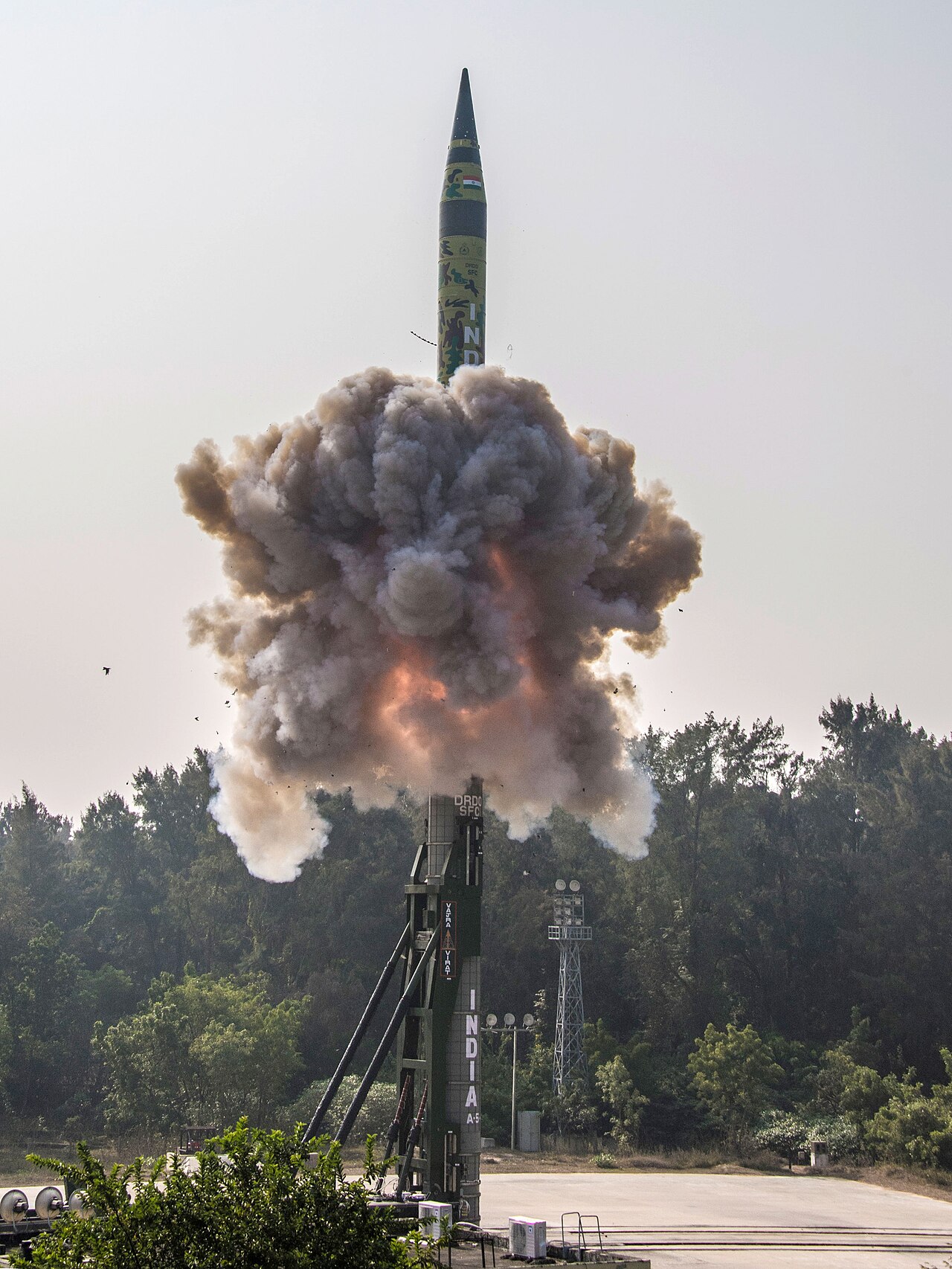
Look up on a clear night and you are looking at the newest theatre of war. The satellites orbiting silently overhead have become the invisible scaffolding of modern military power — they guide weapons to their targets, carry the communications that let forces coordinate across the globe, provide the surveillance that lets commanders see, and deliver the precise timing and navigation on which almost every advanced system depends. A modern military stripped of its satellites would be deaf, blind and lost, and this dependence has turned the once-peaceful expanse of space into contested strategic ground.
India, a nation whose civilian space programme is a source of enormous national pride and global respect, has come to recognise that space is now a domain of security as much as of science. It has demonstrated the ability to destroy a satellite in orbit, stood up a military agency dedicated to space, and begun to build the capabilities to protect its assets on the ultimate high ground. This is the story of how space became militarised, what India has done in response, and why the peaceful heavens have become a frontier that no serious power can afford to leave undefended.
Why militaries live in space
The dependence of modern militaries on space is total and often invisible. Satellites provide navigation and timing — the precise positioning that guides missiles and aircraft, coordinates forces, and, through systems like the American GPS, has become woven into civilian life as well. They provide communications, carrying secure links across oceans and continents that let a commander in one place direct forces in another. They provide surveillance and reconnaissance, the eyes in the sky that watch borders, track movements, and give warning of attack. And they provide early warning of missile launches, the sentinels that would give a nation precious minutes in a nuclear crisis.[1]
Strip these away and a modern military is crippled. Precision weapons lose their precision; forces lose their coordination; commanders lose their sight; nations lose their warning. This is precisely why space has become contested: because an adversary who could blind or deafen an enemy by attacking his satellites would gain an overwhelming advantage, and because the temptation to develop the means to do so has proven irresistible to the major powers. The very indispensability of satellites has made them targets, and the domain that carries them a place that must now be defended.
A modern army without its satellites is a blindfolded giant — enormously strong, and unable to find the enemy or itself.
India's civilian space heritage
India's path into military space is unusual, because it begins from one of the most admired civilian space programmes in the world. Over decades, India built, largely on its own and at a fraction of the cost others spent, a space programme capable of launching satellites, sending missions to the Moon and Mars, and delivering space-based services to its people — weather forecasting, communications, remote sensing, and its own regional satellite-navigation system. This civilian achievement, a point of deep national pride, gave India a foundation of space expertise, launch capability and satellite technology that few nations possess.[2]
That heritage matters strategically because military space capability is built on the same foundations as civilian space capability — the ability to launch, to build satellites, to track objects in orbit, and to master the physics of space. A nation with a strong civilian space programme has, in effect, most of the ingredients for a military one, and India's decades of civilian excellence positioned it to move into the military domain from a position of genuine strength rather than starting from nothing. The satellites that serve India's forces — for communication, surveillance and navigation — draw on the same national expertise that put probes around the Moon and Mars.
Mission Shakti and the demonstration of power
The moment that announced India's arrival as a military space power came with Mission Shakti, the test in which India destroyed one of its own satellites in orbit with a missile launched from the ground — an anti-satellite, or ASAT, demonstration. In a single test, India proved it possessed the technology to track a satellite in space and destroy it with a direct hit, placing it in a very small group of nations to have demonstrated such a capability.[3]
The strategic message of Mission Shakti was deliberate and clear. It was, above all, an act of deterrence — a demonstration that India could hold an adversary's satellites at risk, and therefore that any enemy contemplating an attack on India's space assets would have to reckon with retaliation in kind. In a domain where the ability to threaten an opponent's satellites is a form of deterrence much like the ability to threaten his cities, possessing a demonstrated ASAT capability is a way of protecting one's own assets by ensuring that an attacker would pay a price. India framed the test carefully, emphasising that it sought not to weaponise space aggressively but to establish a credible deterrent and to demonstrate a capability it could not afford to lack while others possessed it.
The test was not without controversy, chiefly over the debris that destroying a satellite creates — fragments that can threaten other satellites and remain a hazard in orbit. India conducted its test at a relatively low altitude, intended to limit the persistence of debris, and defended the demonstration as a responsible establishment of a necessary capability. The episode illustrated the genuine dilemma of military space: that the very act of demonstrating the power to defend one's interests in orbit can endanger the shared environment on which all space users, civilian and military, depend.
Building the institutions of military space
Recognising that space had become a domain of security requiring dedicated attention, India moved to build the institutions to match. It established a Defence Space Agency, a tri-service body to coordinate the military's space efforts and, widely understood, to serve as the nucleus of a future space command as the domain grows in importance. It created a research organisation to develop military space technologies. And it began to integrate space more deliberately into military planning, exercises and doctrine, treating it as an operational domain alongside land, sea, air and cyber.[4]
These institutional steps reflect the recognition that space capability, like cyber, cannot be an afterthought bolted onto the existing services but must be developed and commanded coherently. A dedicated space agency can build the expertise, drive the acquisition of military satellites and space-surveillance capabilities, and develop the doctrine for how India will operate in and defend the space domain. The direction — toward a coherent, dedicated military space capability under unified management — mirrors the path of the world's leading space powers, several of which have established full-fledged space forces or commands.
Space situational awareness and defence
A crucial and less dramatic part of military space is simply knowing what is up there — space situational awareness, the ability to track the thousands of objects in orbit, distinguish satellites from debris, and detect if an adversary's satellite is manoeuvring toward one's own. As space grows crowded and contested, this ability to see and understand the orbital environment becomes fundamental to protecting one's assets: you cannot defend against a threat you cannot detect, and you cannot attribute an attack you did not see coming.[5]
India has invested in building this awareness, developing the tracking and monitoring capabilities to keep watch over the objects in orbit that matter to its security. Alongside it comes the harder work of protecting satellites against the growing array of threats — not only the dramatic direct-ascent missiles demonstrated by ASAT tests, but subtler dangers: satellites that can approach and interfere with others, electronic attacks that jam or spoof satellite signals, and cyber intrusions against the ground systems that control spacecraft. Defending space assets means guarding against this whole spectrum, from the kinetic to the electronic to the cyber, and it is an increasingly central task of military space.
The dilemma of the peaceful frontier
Running through the entire enterprise is a genuine dilemma that India, like every space power, must navigate. Space has long been governed by a shared aspiration that it remain a peaceful domain, used for the benefit of all humanity, and there is a real and widely held interest in preventing space from becoming an arena of open warfare — not least because conflict in space could generate debris that renders vital orbits unusable for everyone, civilian and military alike. India has traditionally championed the peaceful use of space and continues to support that principle diplomatically.[2]
Yet no nation can responsibly leave its space assets undefended while others develop the means to attack them. The dilemma, therefore, is how to build the capabilities to deter and defend against threats in space without accelerating the very weaponisation everyone claims to want to avoid — how to be strong enough to protect one's interests while restrained enough to help preserve the shared environment. India's careful framing of Mission Shakti as deterrence rather than aggression, and its continued advocacy for peaceful norms even as it builds military capability, reflects an attempt to walk exactly this line. Whether the major powers collectively can prevent space from descending into an arena of open conflict is one of the great unresolved questions of the coming decades.
Space is the one battlefield where winning badly could ruin the ground itself — debris does not distinguish friend from foe, nor war from peace.
NavIC: India's own eyes in the sky
One achievement deserves particular attention because it captures both the strategic logic of military space and India's determination to be self-reliant in it: the building of its own regional satellite-navigation system, NavIC. For all their ubiquity, the satellite-navigation signals on which modern militaries and economies depend — the American GPS most prominent among them — are controlled by the nations that own the systems, and a country that relies on another's navigation satellites relies on a service that could, in a crisis, be degraded or denied by its owner.[2]
India learned this lesson pointedly. It is widely recounted that during a past military crisis, India sought precise satellite-navigation data and found that access to the foreign system it depended on could not be assured — a stark demonstration that reliance on another nation's space infrastructure was a strategic vulnerability. The response was to build its own: a regional navigation satellite constellation, NavIC, that provides India with sovereign, assured positioning and timing over its own region, independent of any foreign system that might be switched off or degraded in a moment of need.
The strategic significance of an indigenous navigation system is considerable. Precise positioning and timing are woven into modern military capability — guiding weapons, coordinating forces, synchronising operations — and a nation with its own navigation constellation possesses this capability on its own terms, immune to the risk of denial by a foreign provider. NavIC is thus far more than a technical achievement; it is an assertion of strategic autonomy in a domain where dependence on others is dangerous, and it exemplifies the broader logic driving India's military space effort: to possess, on a sovereign basis, the space-based capabilities on which its security depends.
The threats beyond the missile
The dramatic image of an anti-satellite missile destroying a satellite in a burst of debris tends to dominate discussion of space warfare, but the reality of threats to space assets is broader and, in some ways, more insidious. Direct-ascent missiles of the kind demonstrated in ASAT tests are only one danger. There are also co-orbital threats — satellites that can manoeuvre close to others to inspect, interfere with, or disable them, a capability that blurs the line between a benign inspection satellite and a weapon. There are electronic threats — jamming and spoofing of the signals that satellites transmit and receive, which can deny or corrupt a satellite's service without physically touching it. And there are cyber threats against the ground stations and networks that control spacecraft, which could allow an adversary to disrupt or even seize control of satellites through their earthbound infrastructure.[5]
This spectrum of threats means that defending space assets is far more complex than guarding against a single kind of attack. A satellite might be blinded by a laser, jammed electronically, approached and disabled by another satellite, or compromised through a cyber intrusion against its control systems — and a comprehensive defence must guard against all of these. It requires the ability to detect and understand what is happening in orbit, to attribute hostile acts, to harden satellites and their ground systems against the various forms of attack, and to build resilience so that the loss or degradation of some assets does not cripple the whole. The full picture of space defence is thus a multi-dimensional challenge spanning the kinetic, the electronic and the cyber, and it is one India, like every space power, is only beginning to grapple with fully.
The insidious quality of many of these threats — the fact that a satellite could be disabled electronically or through cyber means without any obvious, attributable act of destruction — mirrors the grey-zone character of cyber conflict on Earth. An adversary might degrade a nation's space capabilities in ways that are deniable and hard to attribute, below the threshold of clear aggression, exploiting the difficulty of knowing exactly what has happened in the distant, opaque environment of orbit. Building the space situational awareness to see and understand what is occurring in space is therefore foundational to defence, because a nation that cannot tell whether its satellite failed by accident or by attack cannot respond, deter or protect itself effectively.
The debris dilemma and the shared commons
Running through the entire subject of military space is a problem without clear precedent in the history of warfare: the danger that fighting in space could ruin space itself for everyone. When a satellite is destroyed — whether by a missile in an ASAT test or in a hypothetical conflict — it shatters into a cloud of debris, fragments travelling at enormous orbital speeds that can themselves destroy other satellites on impact. Enough debris, or a cascade of collisions generating ever more debris, could render valuable orbits dangerous or unusable, threatening the satellites of all nations and even the future ability to operate in those orbits at all.[1]
This creates a genuine and unusual strategic dilemma. Unlike a battlefield on Earth, which can be fought over and then recovered, the orbital environment is a shared commons that could be spoiled for all users, including the victor, by the very act of fighting in it. Debris does not distinguish between the satellites of friend and foe, or between the assets of the nation that created it and everyone else; a war in space could leave a poisoned commons that harms the aggressor as much as the target. This is why there is a real and widely shared interest — including India's — in preventing space from descending into open conflict, and why India conducted its ASAT test at a relatively low altitude intended to limit the persistence of the debris it created.
The dilemma has no easy resolution. On one hand, no responsible nation can leave its space assets undefended while others develop the means to attack them, which drives the development of deterrent and defensive capabilities. On the other, the very use of some of those capabilities — particularly destructive ones that generate debris — could damage the shared environment on which all space activity, civilian and military, depends. Navigating between these imperatives — building the strength to protect one's interests while exercising the restraint to preserve the commons — is one of the central challenges of the space age, and it requires not only national capability but international cooperation and norms that the world is still, imperfectly and slowly, attempting to build. India's careful framing of its own capabilities as deterrent rather than aggressive, and its continued advocacy for the peaceful use of space, reflects an attempt to hold both imperatives at once.
The dual-use foundation: from Gaganyaan to the battlefield
One of the defining features of space technology is that it is inherently dual-use — the same capabilities that serve civilian and scientific purposes also underpin military power, and the line between the two is often impossible to draw. A rocket that launches a weather satellite can launch a spy satellite; the expertise to send a probe to Mars is the expertise to build the missiles and the space systems that serve defence; a human spaceflight programme builds capabilities that extend across the whole space enterprise. India's celebrated civilian space achievements are therefore not separate from its military space capability but foundational to it.[2]
India's pursuit of human spaceflight — its ambition to launch its own astronauts and build toward a sustained human presence in space — exemplifies this dual-use character. A human spaceflight programme develops advanced capabilities in launch, life support, precision, reliability and systems integration that ripple across the entire national space effort, strengthening the foundations on which military space capability also rests. The prestige and inspiration of putting Indians in space are real and valuable in themselves, but the programme also deepens the reservoir of space expertise and capability that serves India's security as surely as its science.
This dual-use foundation is precisely why India's decades of civilian space excellence positioned it to move into the military domain from a position of genuine strength. The capabilities to launch, to build sophisticated satellites, to track objects in orbit, to master the demanding physics of space — all developed through a civilian programme admired around the world — are the same capabilities that military space requires. India did not have to start its military space effort from nothing; it built on one of the world's most accomplished space programmes, and the continued advance of its civilian space ambitions, from lunar and planetary missions to human spaceflight, continues to strengthen the foundation on which its space security rests.
Cooperation, competition and the rules of orbit
The future of space security will be shaped not only by what individual nations build but by whether the international community can establish rules and norms for behaviour in orbit, and India has a significant stake and voice in that effort. Space has long been governed by a body of principles and treaties reflecting the aspiration that it remain a domain used for peaceful purposes and for the benefit of all humanity, but these arrangements were built for an earlier era and are increasingly strained by the militarisation of space, the crowding of orbits, and the development of weapons that could threaten space assets.[1]
India has traditionally championed the peaceful use of space and continues to advocate for it diplomatically, even as it builds the military capabilities that a contested space environment demands. This reflects the same balancing of principle and interest that characterises India's approach across many domains — supporting norms and restraint in principle while ensuring it is not left vulnerable in practice. As a major and respected space power with a strong civilian tradition and growing military capability, India is well placed to be an important voice in the difficult international effort to establish rules of the road for space: measures to limit debris, to constrain the most destabilising weapons, and to preserve the shared commons for all users.
The stakes of that effort are high, because space is a domain where the failure of cooperation could be catastrophic and shared. A descent into open conflict in orbit, with the debris it would generate, could damage the space environment for all nations and for generations, harming aggressor and victim alike. There is thus a genuine common interest — India's included — in preventing space from becoming an arena of open warfare, even as each nation builds the capabilities to defend its own assets. Navigating between the imperative of national defence and the interest in preserving the peaceful commons, and helping to build the international norms that might reconcile the two, is among the great challenges of the space age, and India, drawing on both its civilian heritage and its new military capabilities, will be an important participant in meeting it.
The NewSpace boom and the private frontier
A transformation is reshaping the space domain worldwide, and it carries significant implications for military space that India is moving to harness: the rise of private and commercial space activity, often called NewSpace. For most of the space age, space was the near-exclusive preserve of governments, with their enormous budgets and national programmes. In recent years, falling launch costs, advancing technology and entrepreneurial energy have opened space to a flourishing of private companies and start-ups, building satellites, offering launch services, and creating an expanding commercial space economy.[2]
India has moved deliberately to encourage this transformation, opening its space sector to private industry and start-ups, reforming the rules that once concentrated space activity in its government programme, and fostering a growing ecosystem of Indian space companies. The logic mirrors that behind the opening of the defence sector: private energy, capital and innovation can accelerate and enlarge what a government programme alone could achieve, and a thriving commercial space industry strengthens the whole national space enterprise, civilian and military alike. The same dynamism that has transformed the global space economy can, if nurtured, make India a significant player in the commercial space age.
The military implications are considerable. A vibrant commercial space sector can provide the armed forces with capabilities — satellites, imagery, communications, launch services — more quickly and cheaply than a government programme alone, and it deepens the national base of space technology and talent on which military space capability rests. The proliferation of small, capable, inexpensive satellites, in particular, offers the prospect of resilient constellations that are harder to cripple than a few large, expensive satellites — a valuable quality in a contested space environment, since an adversary cannot easily neutralise a capability distributed across many cheap satellites. As India builds both its military space capability and its commercial space industry, the two reinforce each other, the private frontier strengthening the national capacity to operate, and if necessary defend itself, on the ultimate high ground. The NewSpace boom is thus not only an economic opportunity but a strategic one, and India's embrace of it is part of its broader effort to build depth, resilience and self-reliance in the space domain.
Guarding the ultimate high ground
Military strategists have always prized the high ground, because whoever holds it can see farther, reach farther, and command what lies below. Space is the ultimate high ground — the vantage from which modern militaries see, communicate, navigate and strike — and control of it, or at least the ability to defend one's access to it, has become indispensable to national security. India's move into military space, from the demonstration of Mission Shakti to the building of a defence space agency, is fundamentally about guarding that high ground: ensuring that the satellites on which its forces depend cannot be destroyed with impunity, and that India is not left vulnerable in a domain its rivals are actively contesting.
The transformation of space from a realm of peaceful exploration into a contested strategic domain is one of the defining developments of the age, and it is not one India chose so much as one it has had to answer. Drawing on the deep foundations of its celebrated civilian space programme, it has moved to build the deterrent and defensive capabilities that the militarisation of space demands, while continuing to argue for the peaceful principles it has long upheld. The satellites overhead are silent and invisible, but the contest over them is real, and the nation that fails to defend its place on the high frontier risks finding itself, in the next war, deaf and blind and lost. India has resolved not to be that nation — and so it has climbed, deliberately and carefully, into the militarisation of space.