Geopolitics · Technology
The Technology Handshake: India, America and the New Strategic Partnership
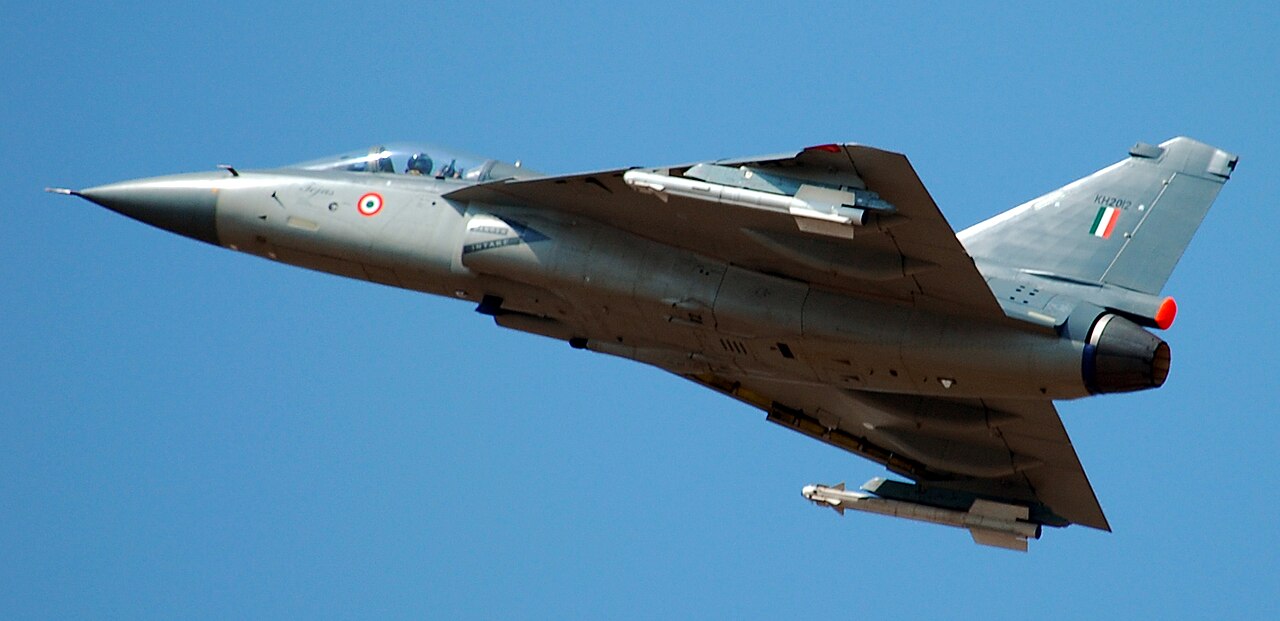
Relationships between great nations are usually measured in treaties and summits, but the deepest ones are increasingly measured in technology — in who shares their most guarded knowledge with whom. For most of the twentieth century, India and the United States were estranged, divided by the Cold War, by India's non-alignment, and by decades of mutual suspicion. That estrangement has given way, over a single generation, to one of the most consequential partnerships of the age, and its defining feature is the sharing of exactly the technologies nations guard most jealously.
Jet engines, semiconductors, artificial intelligence, space, quantum computing, telecommunications — these are the commanding heights of twenty-first-century power, and India and the United States have chosen to climb them together. The partnership has an unlovely acronym and a great deal of substance, and its unspoken subject, the reason it exists at all, is the rise of China. This is the story of how two former estranged democracies became technology partners, what they are building, and why it matters for the balance of power in Asia.
From estrangement to embrace
The distance the relationship has travelled is easy to underestimate. Through the Cold War, India and the United States were often on opposite sides — India non-aligned but tilting toward the Soviet Union for arms and support, America allied with India's rival. India's nuclear tests drew American sanctions. Technology flowed grudgingly if at all, and India spent decades on the wrong side of American export controls, denied access to advanced technology and treated with suspicion.[1]
The thaw began around the turn of the millennium and accelerated through a landmark civil nuclear agreement that symbolically brought India in from the cold, and then through a steady deepening of defence and strategic ties. By the 2020s, the two countries had designated each other major partners, signed the foundational agreements that let their militaries share logistics and secure communications, and begun to describe their relationship as one of the defining partnerships of the century. The technology handshake is the latest and, in some ways, the most profound stage of that long convergence.
Nations share their deepest technology only with those they have decided to trust. That decision, not the technology, is the real news.
What iCET is
The framework that organises much of this cooperation is the initiative on Critical and Emerging Technology — iCET — launched to knit together the two countries' governments, industries and universities around the technologies that will shape the future. Its ambition is to move the relationship beyond buying and selling finished weapons toward genuine co-development and co-production, and to break down the barriers of export control and bureaucratic caution that long kept the most advanced technology from flowing between them.[2]
The initiative spans a deliberately broad set of domains: defence technology and co-production, semiconductors, artificial intelligence, space, quantum technologies, advanced telecommunications, and the resilient supply chains that underpin them all. The breadth is the point. Rather than a single transactional deal, iCET aims to create a dense web of connections across the entire frontier of technology — a partnership deep and diversified enough to be durable, and consequential enough to shift the strategic balance.
The jet engine: the crown jewel
If one project captures the significance of the partnership, it is the agreement to jointly produce advanced jet engines in India. Building a modern fighter jet engine is one of the most difficult feats in all of engineering — a domain so demanding that only a handful of nations have truly mastered it, and one where India, despite decades of effort, has struggled to close the gap. Fighter engines are guarded as among the most sensitive technologies any nation possesses, rarely shared even among close allies.[3]
The decision to co-produce a leading fighter engine in India, with a substantial transfer of technology, was therefore a landmark of extraordinary weight. It offered India a path toward mastering a technology that had eluded it, and toward the goal of powering its own indigenous fighters with engines built at home. And it signalled a depth of trust that would have been unthinkable a generation earlier — the United States sharing knowledge it guards most closely, precisely because it now sees India as a partner worth strengthening. For India's long quest for self-reliance in defence, few developments carry more promise than the prospect of finally building the engine that has been its most stubborn missing piece.
Semiconductors and the supply-chain war
Beyond defence, the partnership reaches into the technology that underpins everything modern: the semiconductor. The tiny chips that run every phone, computer, weapon and vehicle are made in a supply chain of breathtaking complexity and dangerous concentration, with much of the world's most advanced manufacturing clustered in a few locations vulnerable to disruption and geopolitical pressure. Both India and the United States have powerful reasons to diversify that supply chain and to build resilience against the risk of it being cut.[4]
India has moved aggressively to build a domestic semiconductor industry, offering large incentives to attract chip manufacturing and design, and the partnership with the United States — home to much of the world's chip design expertise and equipment — is central to that ambition. Cooperation on semiconductors serves both countries: it helps India climb into one of the most valuable and strategic industries on earth, and it helps America build a more resilient, less concentrated supply chain with a trusted democratic partner. In an era when chips have become as strategic as oil, this is high geopolitics dressed as industrial policy.
Space, AI and the rest of the frontier
The partnership extends across the remaining frontier technologies. In space, where India has built a globally respected and remarkably cost-effective programme, the two countries have deepened cooperation on human spaceflight, exploration and joint missions, combining India's efficiency and ambition with America's experience and resources. In artificial intelligence, they have moved to cooperate on research and on the norms that should govern the technology, aligning two of the world's great pools of talent. And in quantum computing and advanced telecommunications, they have begun to collaborate on technologies still emerging but potentially transformative.[5]
Each of these strands reinforces the others, and together they represent something more than the sum of the parts: an attempt to link the innovation ecosystems of the world's two largest democracies across the whole span of critical technology. The vision is of an India and America whose scientists, companies and militaries work together at the frontier, building a partnership that neither could replicate with anyone else and that becomes harder to unwind the deeper it goes.
The unspoken subject: China
No honest account of this partnership can avoid naming its central strategic logic. The deepening of India-US technology ties is driven, above all, by the rise of China — its growing military power, its technological ambitions, its assertiveness along India's borders and across the Indo-Pacific. Both India and the United States see in China a challenge that neither can meet as effectively alone as together, and technology is the arena where the long-term competition will most be decided.[6]
This shared concern is the gravitational force pulling the two democracies together. It animates their cooperation in groupings like the Quad, their alignment on supply-chain resilience aimed at reducing dependence on China, and their determination to ensure that the technologies of the future are shaped by open societies rather than by an authoritarian rival. India maintains its cherished strategic autonomy — it does not become anyone's ally in the formal sense, and it guards its independence of judgment — but the convergence of interest with the United States on the China question is real, deep and durable, and it underwrites the entire technology partnership.
The frictions and the limits
The relationship is not without friction, and it would be naive to pretend otherwise. The two countries diverge on some questions of foreign policy; India's insistence on strategic autonomy sometimes frustrates American expectations, and its historical ties to Russia for arms and energy have been a recurring point of tension. Trade disputes, differences over technology-transfer terms, and the sheer bureaucratic difficulty of sharing sensitive technology all impose limits and slow the pace. The partnership is a convergence of interests, not a merger of destinies, and each side pursues its own.[2]
Yet the striking thing is how the relationship has weathered these frictions and kept deepening across changes of government in both countries. The underlying logic — two large democracies with complementary strengths and a shared concern about the balance of power in Asia — has proven strong enough to override the periodic tensions. The direction has been remarkably consistent even as the details have been contested, which is the surest sign that the partnership rests on genuine strategic foundations rather than on the goodwill of any particular leader.
India keeps its autonomy and America keeps its interests. That both keep converging anyway is what makes the partnership real.
The long road from the nuclear cold
The depth of today's partnership is best measured against the frost it replaced, and that history deserves telling because it explains both how far the relationship has come and why some caution persists. For decades after independence, India and the United States regarded each other across a gulf of mutual suspicion. India's non-alignment, its socialist economic orientation, and its practical tilt toward the Soviet Union for arms and diplomatic support placed it, in American eyes, on the wrong side of the Cold War. America's alliance with India's regional rival, and its periodic tilts against India in moments of crisis, confirmed Indian suspicions of American unreliability.[1]
The estrangement was sharpest over nuclear technology. India's development of nuclear weapons, and its refusal to sign the non-proliferation arrangements it regarded as discriminatory, made it the target of American sanctions and technology-denial regimes for decades. India found itself on export-control blacklists, cut off from advanced technology, and treated as a proliferation problem rather than a partner. A generation of Indian scientists and engineers worked under the shadow of these denials, which had the paradoxical effect of forcing India toward self-reliance in fields like space and missiles precisely because it could not buy what it needed abroad.
The thaw, when it came, was gradual and hard-won. A landmark civil nuclear agreement in the 2000s symbolically ended India's nuclear isolation and brought it, in effect, in from the cold — an American acknowledgment that India was a responsible power to be engaged rather than contained. From that foundation, defence and strategic ties deepened steadily: the designation of India as a major defence partner, the signing of the foundational agreements that allow the two militaries to share logistics, communications and geospatial intelligence, and a growing habit of cooperation across successive governments in both countries. The technology partnership of today is the latest stage of this long convergence, and the memory of the decades of denial is part of why India guards its strategic autonomy so jealously even as it embraces the partnership.
The semiconductor as strategic terrain
The cooperation on semiconductors deserves fuller treatment, because chips have become perhaps the single most strategically contested technology of the age, and the India-US partnership around them illustrates how technology and geopolitics have fused. The tiny semiconductors that run every modern device — every phone, computer, weapon, vehicle and appliance — are made through a supply chain of almost unimaginable complexity, and that supply chain is dangerously concentrated, with much of the world's most advanced chip manufacturing clustered in a handful of locations vulnerable to natural disaster, geopolitical pressure and potential conflict.[4]
This concentration has become a source of acute strategic anxiety for both India and the United States. A disruption to the world's chip supply — whether through conflict, coercion or catastrophe — would ripple through every economy and every military that depends on advanced electronics, which is to say all of them. Both countries therefore have powerful reasons to diversify chip manufacturing, build resilience into the supply chain, and reduce the dangerous dependence on a few concentrated sources. Cooperation on semiconductors is, at bottom, an effort to make the foundation of the modern economy and military more secure against disruption.
For India, the partnership offers a path into one of the most valuable and strategic industries on earth. India has moved aggressively to build a domestic semiconductor industry, offering large incentives to attract chip fabrication and design and aiming to establish itself as a significant node in the global supply chain. American expertise in chip design, equipment and know-how is central to that ambition, and cooperation serves both sides: it helps India climb into the industry while helping America build a more resilient, diversified supply chain anchored partly in a trusted democratic partner rather than concentrated in vulnerable locations. In an age when chips have become as strategically vital as oil once was, this cooperation is high geopolitics conducted through the language of industrial policy.
The Quad and the shape of the Indo-Pacific
The bilateral technology partnership sits within a wider architecture of cooperation, the most prominent expression of which is the Quad — the grouping of India, the United States, Japan and Australia that has grown from a loose consultation into a substantive partnership spanning security, technology, infrastructure and more. The Quad is not a formal alliance, and India in particular is careful to insist that it is not an Asian version of a military bloc; but it is a meaningful alignment of four major democracies with shared concerns about the balance of power in the Indo-Pacific.[6]
Technology has become one of the Quad's central themes, with cooperation on critical and emerging technologies, resilient supply chains, secure telecommunications and other domains that overlap heavily with the bilateral India-US agenda. The logic is that the technologies of the future should be shaped by open societies working together rather than ceded to an authoritarian rival, and that the four democracies can achieve together what none could alone. The Quad both reflects and reinforces the India-US technology partnership, embedding it in a broader regional structure and signalling that the alignment of interests extends beyond any single bilateral relationship to a wider community of like-minded powers.
India's participation in the Quad, and its deepening technology ties with the United States, must be understood alongside its continued insistence on strategic autonomy. India does not seek to become a treaty ally bound to fight others' wars; it guards its independence of judgment and its ability to pursue its own interests, including its relationships with powers like Russia. The remarkable feature of the current moment is that this insistence on autonomy has proven entirely compatible with a deepening alignment with the United States and its partners — a convergence of interests robust enough to flourish without the formal bindings of alliance. It is a distinctively Indian approach to partnership, and it appears, so far, to work.
From arms sales to co-production
The defence relationship between India and the United States has undergone an evolution that mirrors and reinforces the technology partnership, and tracing it reveals how far the two have come. Not long ago, defence ties were essentially non-existent, with India buying its weapons from the Soviet Union and later Russia and from Europe. The transformation began with America becoming a significant arms supplier to India, selling major platforms — transport and maritime patrol aircraft, helicopters, artillery and more — as India diversified away from its historic dependence on Russian equipment.[3]
But the more profound shift has been the movement beyond simple arms sales toward genuine co-development and co-production — from India buying finished American weapons to the two countries building things together, with technology shared and manufacturing located in India. This evolution matters enormously, because it aligns with India's deepest defence priority: not merely acquiring weapons but building the capacity to make them, achieving the self-reliance that has been its long-standing goal. A relationship built on co-production serves India's ambition to build its own defence-industrial base in a way that simple purchases never could, and it reflects a depth of trust and partnership far exceeding an ordinary supplier-customer relationship.
The jet-engine agreement is the flagship of this evolution, but it is part of a broader pattern of moving toward joint development and production across a range of systems. This co-production model offers India access to advanced technology and the industrial learning that comes from building sophisticated systems, while giving the United States a deeper and more durable partnership and a role in India's growing defence industry. It knits the two countries' defence establishments together in a way that mere sales could not, creating shared stakes and interdependencies that make the relationship more resilient. The trajectory — from no defence relationship, to arms sales, to co-development and co-production — traces the deepening of one of the most consequential strategic partnerships of the age, and it points toward a future in which the two democracies increasingly build the tools of their security together.
The Russia factor
No honest account of the India-US partnership can ignore the presence of a third party that complicates it: Russia. For decades, the Soviet Union and then Russia was India's principal arms supplier and a reliable strategic partner, willing to sell advanced weapons and share technology when the West would not, and standing with India at moments when others did not. This relationship left India with a military heavily equipped with Russian-origin systems and a reservoir of goodwill and habit that does not simply vanish because a new partnership with the United States has grown.[1]
This inheritance creates real friction with the United States. India's continued reliance on Russia for certain arms, spares and energy, and its refusal to align fully with Western positions on matters involving Russia, has been a recurring source of tension — the Americans sometimes frustrated by India's ties to Moscow, the Indians insistent on their right to pursue their own interests and maintain their own relationships. The purchase of major Russian systems has at times risked triggering American sanctions regimes, and India has had to navigate carefully between its old partner and its new one.
Yet the striking thing is how the India-US partnership has continued to deepen despite this friction, which reveals much about the underlying logic of the relationship. India's insistence on maintaining its ties to Russia is an expression of the same strategic autonomy that shapes its whole foreign policy — the determination to keep its options open, to avoid dependence on any single power, and to judge each relationship by its own interests rather than by the demands of any bloc. The United States, for its part, has increasingly accepted that a partnership with India means a partnership with a genuinely independent power that will not simply follow Washington's lead. That the relationship keeps deepening even as India guards its autonomy and its Russian ties is the surest sign that it rests on real and durable convergence of interest rather than on alignment, and the gradual shift of India's arms purchases toward indigenous production and Western sources, over time, may ease the friction without India ever abandoning its cherished independence.
Space, human spaceflight and the final frontier
Among the most inspiring dimensions of the partnership is cooperation in space, where India brings genuine and hard-won strengths to the table. Over decades, India built one of the world's most respected and cost-effective space programmes, achieving feats — missions to the Moon and Mars, the launching of satellites for itself and for others — that few nations have matched, and doing so at a fraction of the cost others spent. This is not a domain in which India comes as a supplicant; it comes as an accomplished space power with capabilities and a track record that command respect.[5]
The two nations have moved to deepen cooperation across the space domain — in human spaceflight, as India pursues its own ambition to launch astronauts and build toward a sustained human presence in space; in exploration and scientific missions that combine India's efficiency and ambition with America's experience and resources; and in the broader space economy that is growing rapidly as launch costs fall and commercial activity expands. Joint missions, shared research, and cooperation in training and technology knit together two of the world's significant space programmes, to the benefit of both.
The space partnership carries significance beyond the scientific and commercial, because space has become a domain of security as much as of exploration, and cooperation between India and the United States in space reinforces their broader strategic alignment. As both nations grapple with the militarisation of space and the need to protect their space assets, their partnership in the civil space domain builds the trust, the shared capabilities and the habits of cooperation that extend into the security dimension as well. The final frontier, once a theatre of Cold War competition, has become an arena of cooperation between the world's two largest democracies — a fitting symbol of how far the relationship has travelled, and of how much the two nations now choose to build together.
The human bridge
Beneath the government agreements and the corporate deals lies a foundation that may matter more than any of them: the vast and deep human connection between India and the United States. Millions of people of Indian origin live in the United States, forming one of its most successful and influential communities, prominent in technology, medicine, academia, business and increasingly in public life. Hundreds of thousands of Indian students study at American universities, and generations of Indians have built their careers in American technology companies and research institutions. This human bridge is a living, dense network of connection that no treaty could create and no political dispute could easily sever.[1]
This connection is a strategic asset of the first order, because the technologies at the heart of the partnership are ultimately built by people, and the flow of talent, ideas and relationships between the two countries strengthens the whole enterprise. Indian engineers and scientists trained in or working with American institutions carry knowledge and relationships back and forth; the personal and professional networks that span the two countries facilitate the collaboration that formal agreements enable; and the shared familiarity, language and habits of cooperation smooth the friction that so often complicates international partnership. The innovation ecosystems of the two nations are linked not only by policy but by people, and that human linkage is among the deepest foundations of the relationship.
The educational and research dimension is particularly significant for the future. As the two countries deepen cooperation in the technologies that will shape the coming decades — artificial intelligence, semiconductors, quantum computing, space — the collaboration of their universities, researchers and students becomes ever more valuable, building the shared knowledge and the personal connections on which long-term cooperation depends. The young Indians studying and researching in America today, and the Americans engaging with India's rising technology sector, are the human infrastructure of tomorrow's partnership. In an age when technology is built by talent and talent flows through human networks, the dense connection between the Indian and American peoples is perhaps the most durable and consequential foundation of the entire relationship — a bridge built not of agreements but of people, and all the stronger for it.
Why it matters
The technology handshake between India and the United States is one of the quiet revolutions of contemporary geopolitics. It gives India access to the advanced technology it has long sought — jet engines, chips, space and AI cooperation, the tools of a self-reliant great power. It gives America a strong democratic partner in the most consequential region of the twenty-first century. And it shifts the strategic map of Asia, aligning the world's two largest democracies across the frontier where the future will most be contested.
For India, the partnership is a powerful accelerant of its own ambitions — to master the technologies that have eluded it, to build a resilient and advanced industrial base, and to take its place among the powers that shape rather than merely inhabit the emerging world order. The estrangement of the twentieth century has given way to a handshake over the technologies of the twenty-first. How firmly that handshake holds, and how much the two nations manage to build together, will help decide the balance of power in Asia for a generation.
Sources & further reading
- "India–United States relations," Wikipedia.
- "Initiative on Critical and Emerging Technology," Wikipedia.
- Ministry of Defence, Government of India — mod.gov.in.
- "Semiconductor industry," Wikipedia.
- Ministry of External Affairs, Government of India — mea.gov.in.
- "Quad (Quadrilateral Security Dialogue)," Wikipedia.