Defence · Technology
The Hypersonic Race: India's Bid to Master the Fastest Weapons on Earth
Speed has always been a currency of war, but there is a threshold beyond which speed becomes something qualitatively new. A weapon travelling faster than five times the speed of sound — hypersonic, in the language of engineers — crosses that threshold. It is not merely a faster missile; it is a weapon that compresses the time to react to almost nothing, that can manoeuvre where old warheads flew in a predictable arc, and that defeats, by its very nature, the missile-defence systems the world spent decades and fortunes building.
A small club of nations is racing to master this technology, and the competition is reshaping the strategic balance in Asia and beyond. India has quietly become a serious contender, pursuing both the exotic scramjet engines that power sustained hypersonic flight and the glide vehicles that ride atop rockets to blistering speed. This is the story of why hypersonic weapons matter so much, and where India stands in one of the defining technological contests of the age.
What "hypersonic" really means
The word gets used loosely, so it is worth being precise. Ordinary ballistic missiles already travel at hypersonic speeds during parts of their flight — a warhead re-entering the atmosphere moves far faster than Mach 5. What is new about the weapons everyone is racing to build is not raw speed alone but the combination of extreme speed with manoeuvrability and a low, unpredictable flight path. A traditional ballistic missile arcs high into space along a path that radar can detect early and defences can calculate. The new hypersonic weapons stay lower, change course, and arrive before the defender has resolved where they are going.[1]
Two main types define the field. The hypersonic glide vehicle is boosted to high speed by a rocket, then released to glide and manoeuvre through the upper atmosphere toward its target, skipping and weaving in a way no ballistic warhead does. The hypersonic cruise missile is powered throughout its flight by an air-breathing engine called a scramjet — a supersonic-combustion ramjet — that lets it sustain hypersonic speed under power, flying low and fast like a cruise missile but many times quicker. Each poses a distinct and formidable challenge to any defender.
The hypersonic weapon's true payload is not the warhead. It is the collapse of the time to decide.
Why they break the shields
The strategic disruption of hypersonic weapons lies in what they do to defence. For decades, the logic of missile defence rested on prediction: detect the launch, compute the ballistic arc, and position an interceptor along the calculated path. That logic assumes the incoming warhead flies where physics says it must. A manoeuvring hypersonic weapon breaks the assumption. It can be aimed at one target and swerve to another; it can stay below the horizon of long-range radar until it is dangerously close; and even once detected, its combination of speed and manoeuvre leaves so little time and such an uncertain path that intercepting it is extraordinarily hard.[2]
The consequence is a shift in the offence-defence balance toward the offence. Nations that spent enormous sums on layered missile-defence networks find those networks suddenly less reassuring. Deterrence calculations change: a weapon that can strike high-value targets — command centres, ports, carriers, air bases — with little warning and near-certainty of penetration is a powerful instrument of both coercion and war-fighting. It is precisely this disruptive quality that has driven the great powers, and now India, into a race to field it before their rivals do.
The great-power race
India does not run this race alone, and understanding the field explains the urgency. Russia has fielded hypersonic systems, including glide vehicles and air-launched missiles, and has used some in combat. China has invested heavily and is widely assessed to have made major advances in hypersonic glide technology, a development that jolted Western defence establishments and underlined how the technology could shift the balance in the Indo-Pacific. The United States, having arguably been slower off the mark, has poured resources into catching up across multiple programmes.[3]
For India, the most consequential fact is that its principal continental rival has made hypersonics a priority and a point of national pride. A neighbour able to strike with fast, manoeuvring, hard-to-intercept weapons across the shared frontier changes the calculus of any crisis. India cannot afford to be a generation behind in a technology that so directly affects deterrence on its own borders. That strategic necessity — not prestige — is what has driven India's own hypersonic effort from laboratory curiosity to national programme.
India's scramjet breakthrough
India's most important hypersonic milestone came from the exotic, difficult world of the scramjet. Building an engine that can sustain combustion in air rushing through it at hypersonic speed — igniting and holding a flame in what is essentially a hurricane — is one of the hardest challenges in aerospace engineering. India's Defence Research and Development Organisation pursued it through the Hypersonic Technology Demonstrator Vehicle, and its successful flight test — demonstrating a scramjet engine igniting and operating in sustained hypersonic flight — placed India in a very small group of nations to have proven the technology.[4]
The significance was foundational rather than immediately operational. A demonstrator is not a fielded weapon; it is a proof that the underlying physics and engineering are within India's grasp. But scramjet propulsion is the gateway to an entire class of hypersonic cruise missiles, and mastering it means India can, in principle, develop such weapons indigenously rather than depend on any foreign source. In a field where the leading technologies are closely guarded national secrets, the ability to build one's own is the whole game.
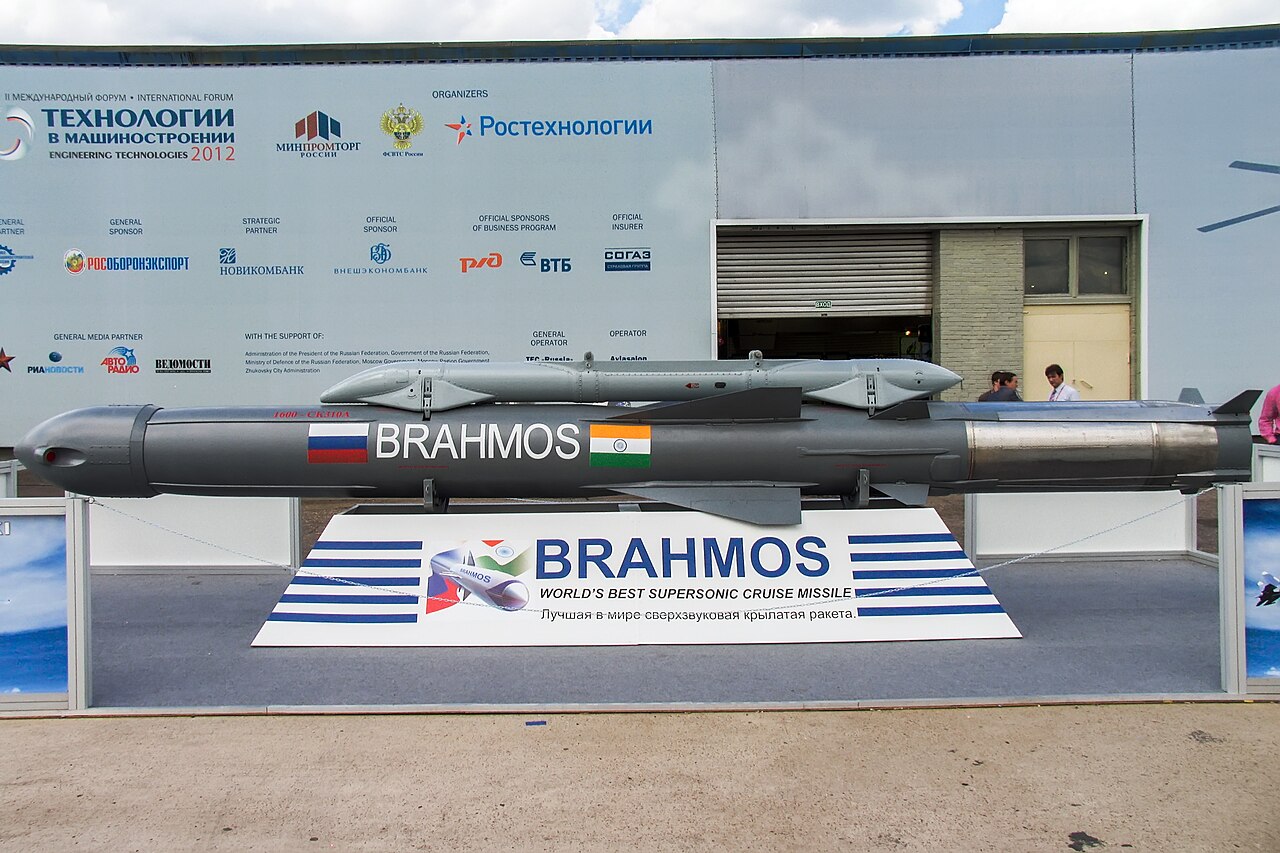
India has also reportedly conducted tests of longer-range hypersonic missile systems, signalling a move from demonstrating the technology toward developing deployable weapons. And the well-known BrahMos programme has long carried the promise of a hypersonic successor — a next-generation missile that would push the already-fast BrahMos into the hypersonic regime, combining India's proven cruise-missile pedigree with the new speed threshold. Progress in this domain is, by its nature, wrapped in secrecy, but the direction of travel is clear: from proving the science to building the weapon.
The engineering mountain
It is worth dwelling on how genuinely hard this technology is, because the difficulty is central to why so few nations have it. A hypersonic vehicle flying through the atmosphere faces heat that can melt ordinary materials — friction at such speeds turns the leading edges of the vehicle into a furnace, demanding exotic heat-resistant materials and thermal protection. It faces aerodynamic forces that shift violently and unpredictably. It must carry guidance and control systems that keep working while the vehicle is enveloped in superheated, ionised air that can blind sensors and disrupt communications.[5]
The scramjet compounds every difficulty. Sustaining combustion in supersonic airflow has been compared to keeping a candle lit in a gale; the timing, the geometry and the fuel injection must be exquisitely controlled. Testing is punishing and expensive, because the conditions are so extreme that they are hard to reproduce on the ground and unforgiving in the air. Each of these obstacles is a filter that has kept most nations out of the field, and clearing them is precisely why India's demonstrations carry such weight — they are evidence that Indian science and industry can operate at the frontier of what is technologically possible.
To fly hypersonic is to keep a flame burning in a gale, inside a furnace, while steering blind. Few nations can.
What it means for deterrence
The strategic payoff of an indigenous hypersonic capability is deterrence that cannot be easily neutralised. A hypersonic weapon that a rival cannot reliably intercept holds that rival's most valued assets at risk, and the credible threat of such a strike shapes behaviour in a crisis long before any weapon is fired. For India, facing adversaries who are themselves developing these weapons, possessing a comparable capability is a matter of maintaining the balance — ensuring that no neighbour can contemplate a fast, decapitating strike in the belief that India could neither prevent it nor answer it in kind.
There is a defensive dimension too. Understanding hypersonic weapons from the inside — having built and flown them — is essential to defending against them. The knowledge of how they perform, where they are vulnerable, and how they might be tracked and countered flows from the same programmes that build them. India's hypersonic effort is therefore double-edged in the useful sense: it strengthens both the sword and the shield, and a nation that can build these weapons is far better placed to eventually counter an adversary's than one that has only watched from outside.
The glide vehicle versus the scramjet
The two families of hypersonic weapon deserve a closer comparison, because they represent genuinely different engineering philosophies and pose different problems for both attacker and defender. The hypersonic glide vehicle takes the path of least resistance to speed: it is boosted to enormous velocity by a rocket, much like a ballistic missile, and then released to glide unpowered through the upper atmosphere, using its speed and its aerodynamic shape to skip, weave and manoeuvre toward its target. Its advantage is that it borrows proven rocket technology to reach hypersonic speed; its challenge is surviving the heat and controlling the flight of an unpowered body hurtling through the atmosphere at many times the speed of sound.[2]
The hypersonic cruise missile, by contrast, takes the harder engineering road for a greater operational reward. Rather than being boosted and then gliding, it is powered throughout its flight by a scramjet — an air-breathing engine that sustains combustion in supersonic airflow — allowing it to fly low, fast and under power like a cruise missile, but many times quicker than any conventional one. Because it is powered, it can sustain its speed and manoeuvre with more energy and for longer; because it flies low and breathes air, it need not follow the high, detectable arc of a boosted vehicle. But the scramjet is fiendishly difficult to build, which is why powered hypersonic cruise missiles have lagged behind boost-glide weapons in most nations' arsenals.[5]
India has pursued both paths, and the significance of doing so is that mastery of each opens a different door. The glide-vehicle path leads toward long-range, fast, manoeuvring strategic weapons that can penetrate defences; the scramjet path leads toward a whole class of powered hypersonic cruise missiles, including the long-promised hypersonic successor to BrahMos. A nation that can build both is a nation with the full toolkit of hypersonic strike, and India's pursuit of each — the reported testing of longer-range hypersonic systems on one hand, and the scramjet demonstration on the other — signals an ambition to master the complete field rather than a single corner of it.
The physics of flying through fire
It is worth dwelling in more depth on why hypersonic flight is so brutally hard, because the difficulty is the entire reason so few nations possess the technology, and understanding it makes India's achievements more impressive. At hypersonic speeds, the air itself becomes an enemy. Friction between the vehicle and the atmosphere generates temperatures so extreme that they can melt or ablate ordinary materials — the leading edges and surfaces of a hypersonic vehicle become a furnace, demanding exotic, expensive, heat-resistant materials and sophisticated thermal-protection systems simply to survive the flight.[5]
The heat is only the beginning. At such speeds the air around the vehicle can become ionised — turned into a superheated, electrically charged plasma that envelops the craft, disrupts radio communications, and can blind the sensors the vehicle needs to navigate and guide itself. Controlling a vehicle that is manoeuvring through the atmosphere at many times the speed of sound, where aerodynamic forces shift violently and the smallest error in control becomes catastrophic in an instant, demands guidance and control systems of extraordinary precision and robustness. And all of this must work while the vehicle is wrapped in plasma and roasting in its own friction.
The scramjet compounds every one of these difficulties with one of its own that is, if anything, harder still: sustaining combustion in air that is rushing through the engine at supersonic speed. Engineers compare it to keeping a candle lit in a hurricane — the fuel must be injected, mixed and ignited, and the flame held stable, in an airflow moving faster than sound, with the timing and geometry controlled to exquisite tolerances. Testing all of this is punishing and enormously expensive, because the extreme conditions are hard to reproduce on the ground and unforgiving in flight. Each of these obstacles has kept most of the world out of the hypersonic club, and clearing them is precisely why India's demonstrations carry such weight: they are proof that Indian science and industry can operate at the absolute frontier of the physically possible.
India's programmes in depth
India's hypersonic effort spans several strands, and understanding them individually clarifies where the country stands. The foundational achievement was the Hypersonic Technology Demonstrator Vehicle, a programme aimed squarely at the hardest problem — proving that India could build and fly a scramjet engine that ignites and operates in sustained hypersonic flight. Its successful flight test, demonstrating the scramjet functioning as intended, placed India among the very few nations to have proven this technology, and it established the scientific and engineering foundation on which an entire class of future hypersonic cruise missiles could be built.[4]
Beyond the demonstrator, India has reportedly moved toward developing deployable hypersonic weapons — conducting tests of longer-range hypersonic missile systems that signal a transition from demonstrating the underlying technology toward fielding actual weapons. Progress in this domain is, by its nature, cloaked in secrecy, as every hypersonic power guards its advances closely; the public record captures only glimpses of what is a deliberately opaque national effort. But the visible milestones point unmistakably toward a programme moving from the laboratory toward the arsenal.
And then there is the BrahMos connection, which ties India's hypersonic ambition to its greatest existing missile success. The BrahMos supersonic cruise missile has long carried the promise of a hypersonic successor — a next-generation weapon that would push the already-fast missile across the hypersonic threshold, marrying India's proven cruise-missile pedigree and manufacturing base to the new speed regime that scramjet mastery makes possible. Such a weapon would be formidable: a hypersonic cruise missile drawing on a mature and battle-tested lineage. The convergence of India's scramjet achievement with its BrahMos expertise points toward exactly the kind of powered hypersonic strike weapon that represents the cutting edge of the field.
The collapse of warning time
The deepest strategic consequence of hypersonic weapons, and the one that most worries thoughtful analysts, is what they do to the time available to decide. Deterrence and crisis stability rest heavily on time — on the minutes or hours a nation's leaders have to detect an attack, assess it, and decide how to respond. Hypersonic weapons compress that time toward zero. A weapon that flies low, fast and manoeuvring, arriving before it can be tracked and its target confirmed, leaves defenders and decision-makers almost no time to react, and this collapse of warning is destabilising in ways that go beyond any single weapon's destructive power.[1]
The danger is twofold. On one hand, the near-absence of warning could tempt an aggressor to believe a fast, decapitating strike might succeed before the victim could respond — undermining the assured-retaliation logic on which nuclear deterrence rests. On the other, the compression of decision time raises the risk of catastrophic miscalculation: a nation with only moments to decide, unable to be certain whether an incoming weapon is conventional or nuclear or where it is truly headed, might respond hastily and wrongly, escalating a crisis that clearer heads with more time might have contained. The hypersonic weapon's manoeuvrability even blurs the distinction between conventional and nuclear attack, since the same weapon might carry either warhead and its target cannot be known until impact — a genuinely destabilising ambiguity.
For India, navigating this compressed and ambiguous strategic environment requires not only building hypersonic weapons but thinking carefully about the deterrence and crisis-stability implications of a world in which they proliferate. Possessing a comparable capability is necessary to maintain the balance and deny an adversary the temptation of a fast, unanswerable strike; but the broader danger — of a world where warning time has collapsed and miscalculation is more likely — is one that affects all nuclear powers and that no single nation's arsenal can resolve. It is among the reasons hypersonic weapons are as much a strategic problem to be managed as a capability to be acquired.
Defending against the undefendable
If hypersonic weapons defeat existing defences by their nature, the obvious question is whether anything can be done to defend against them — and the answer, though difficult, is not simply no. Defending against hypersonic weapons is one of the hardest problems in military technology, precisely because their combination of extreme speed, low flight path and manoeuvrability defeats the prediction-based logic on which traditional missile defence rests. But nations are pursuing several avenues, and understanding them illuminates both the difficulty and the direction of the field.[2]
The first challenge is simply detecting and tracking a hypersonic weapon in time to do anything about it. Because these weapons fly lower than ballistic missiles and manoeuvre unpredictably, tracking them may require new sensor architectures — including networks of satellites able to watch large areas continuously and follow a manoeuvring target through its flight, rather than the ground-based radars optimised for predictable ballistic arcs. Building the sensor layer to see hypersonic threats reliably is a prerequisite for any defence against them, and it is an area of intense investment among the major powers.
Even with detection, actually intercepting a manoeuvring weapon travelling at many times the speed of sound is extraordinarily demanding, and it is driving interest in new kinds of interceptors and, increasingly, in directed-energy weapons that might engage a hypersonic threat at the speed of light rather than trying to chase it with another missile. For India, which is both developing hypersonic weapons and must eventually defend against an adversary's, the two efforts are deeply connected: understanding these weapons from the inside — having built and flown them — is essential to devising the means to track and counter them. A nation that can build hypersonic weapons is far better placed to eventually defend against them than one that has only watched from outside, and India's investment in the offensive technology strengthens its long-term capacity for defence as well.
The absence of arms control
One of the most troubling features of the hypersonic race is that it is unfolding in a near-vacuum of arms control, at a time when the broader architecture of restraint on strategic weapons has been eroding. The great powers are developing and fielding these destabilising weapons with few of the treaties, verification regimes or mutual restraints that once governed strategic competition, and the technical characteristics of hypersonic weapons make them especially difficult to constrain through traditional arms-control approaches.[1]
The difficulties are real. Hypersonic weapons blur the line between conventional and nuclear systems, since the same weapon might carry either warhead and its nature cannot be known until it strikes — which complicates any attempt to count or limit them by category. They compress warning and decision time in ways that heighten the risk of miscalculation and escalation. And they are being pursued by multiple powers in an atmosphere of strategic competition and mutual suspicion that is not conducive to the negotiation of restraints. The result is a dangerous dynamic: a race to field weapons that undermine crisis stability, without the guardrails that might manage the risks they create.
For India, this environment poses a genuine dilemma. On one hand, it must develop hypersonic capabilities to maintain the balance and deny adversaries the temptation of a fast, unanswerable strike, since restraint by India alone while others race ahead would simply leave it vulnerable. On the other, the broader proliferation of these destabilising weapons, in the absence of arms control, makes the world more dangerous for everyone, India included. Navigating between the imperative to keep pace and the interest in a stable strategic environment is a challenge that no single nation can resolve on its own, and it is among the reasons hypersonic weapons represent not just a capability to be acquired but a strategic problem to be managed — one whose ultimate resolution, if it comes, will require the major powers to rediscover the discipline of mutual restraint that the current race so conspicuously lacks.
The cost, the industry and the talent
Behind every hypersonic milestone lies an enormous and sustained investment of money, industrial capacity and human talent, and understanding this foundation clarifies why the field is the preserve of only a few nations and what India must sustain to remain among them. Hypersonic development is extraordinarily expensive — the testing alone, requiring the reproduction of extreme conditions on the ground and costly flight trials, consumes vast resources, and the research demands the most advanced materials, manufacturing and scientific expertise. This is not a domain a nation can enter cheaply or sustain casually; it requires a long-term national commitment measured in decades and considerable resources.[5]
It requires, too, an industrial and scientific base capable of operating at the absolute frontier of the possible — the exotic heat-resistant materials, the precision manufacturing, the advanced propulsion and guidance, the testing infrastructure. Building and sustaining this base is itself a major achievement, and it yields benefits that extend well beyond hypersonic weapons: the materials, propulsion and manufacturing capabilities developed for hypersonic flight advance a nation's broader aerospace and defence-technology capacity. India's hypersonic programmes, in pushing the frontier of what its science and industry can do, strengthen the whole ecosystem of advanced Indian defence technology, and the expertise accumulated flows into other demanding domains.
Above all, hypersonic development requires talent — the scientists, engineers and technicians capable of solving some of the hardest problems in aerospace, of igniting a flame in a supersonic gale and steering a vehicle through fire. Cultivating and retaining this talent, building the research institutions and the pipeline of skilled people, is essential to sustaining a hypersonic capability over the long term. India's success in demonstrating scramjet flight and pursuing hypersonic weapons reflects the depth of its scientific and engineering talent, developed over decades through its defence-research and space establishments. Sustaining that talent, and the investment and industrial base that support it, is the real requirement for staying in the hypersonic race — not a single achievement but a continuous national effort, maintained across the years, that keeps India at the frontier of one of the most demanding technologies humanity has attempted.
The race without a finish line
Hypersonic technology is not a prize that is won once and kept. Like all military technology, it advances continuously — faster engines, better materials, longer ranges, smarter guidance, and eventually the defences that will be built to counter it. The nations at the frontier will keep pushing, and the gap between the leaders and the followers will be measured not by a single achievement but by the ability to keep innovating year after year. India's challenge is not merely to reach the frontier but to stay there, sustaining the investment, the talent and the industrial base that hypersonic mastery demands.
What India has already shown is that it belongs in the conversation — that a country long dependent on imported weapons can, through decades of patient scientific effort, place itself among the handful of nations mastering the fastest and most disruptive weapons of the age. The hypersonic race is one where the price of falling behind is strategic vulnerability and the reward for keeping pace is a deterrent that no existing shield can stop. India has chosen, unmistakably, to run it — and the flame it lit in that scramjet's gale is the proof that it can.