Current Affairs · Leadership
General Bipin Rawat and the Birth of the CDS
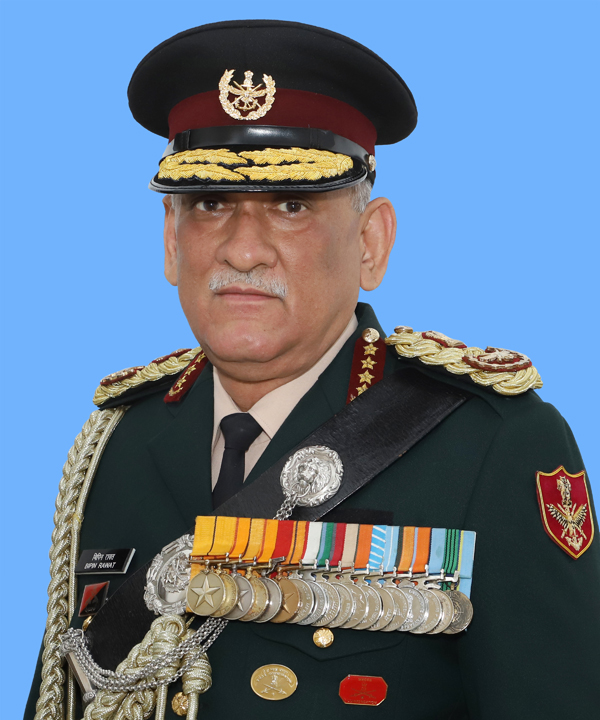
For more than seventy years, India's three armed forces — the Army, the Navy and the Air Force — fought, trained and planned largely as three separate worlds. Bringing them together under a single strategic head had been recommended for decades. In 2020, it finally happened, and the man chosen to lead the change was General Bipin Rawat, India's first Chief of Defence Staff.
Why the CDS was created
Modern war is not fought by one service alone. Air power supports the soldier on the ground; the navy secures the seas that supply both; intelligence, space and cyber capabilities tie everything together. Yet for decades, India's services planned their budgets, procurement and operations in separate silos, coordinating only at the top.[1]
The need for a single point of military advice to the government, and for genuine "jointness" between the services, had been urged after every major conflict — including the Kargil War, whose review committee strongly recommended it. On 1 January 2020, the post of Chief of Defence Staff was created, and General Bipin Rawat, then the Army Chief, became the first to hold it.[1]
Not to conquer, but to defend, the line we hold has no end.
The vision: theatre commands
Rawat's central mission was to push India toward integrated theatre commands — the idea that, instead of the Army, Navy and Air Force each running their own commands, India would create unified commands organised by geography or function, in which all three services fight together under one commander.[1]
It is one of the most significant military reforms in India's history, and also one of the hardest — requiring three proud, century-old services to surrender some independence for the sake of combined strength. Rawat brought to it his characteristic bluntness and drive, determined to make jointness a reality rather than a slogan.
A soldier's soldier
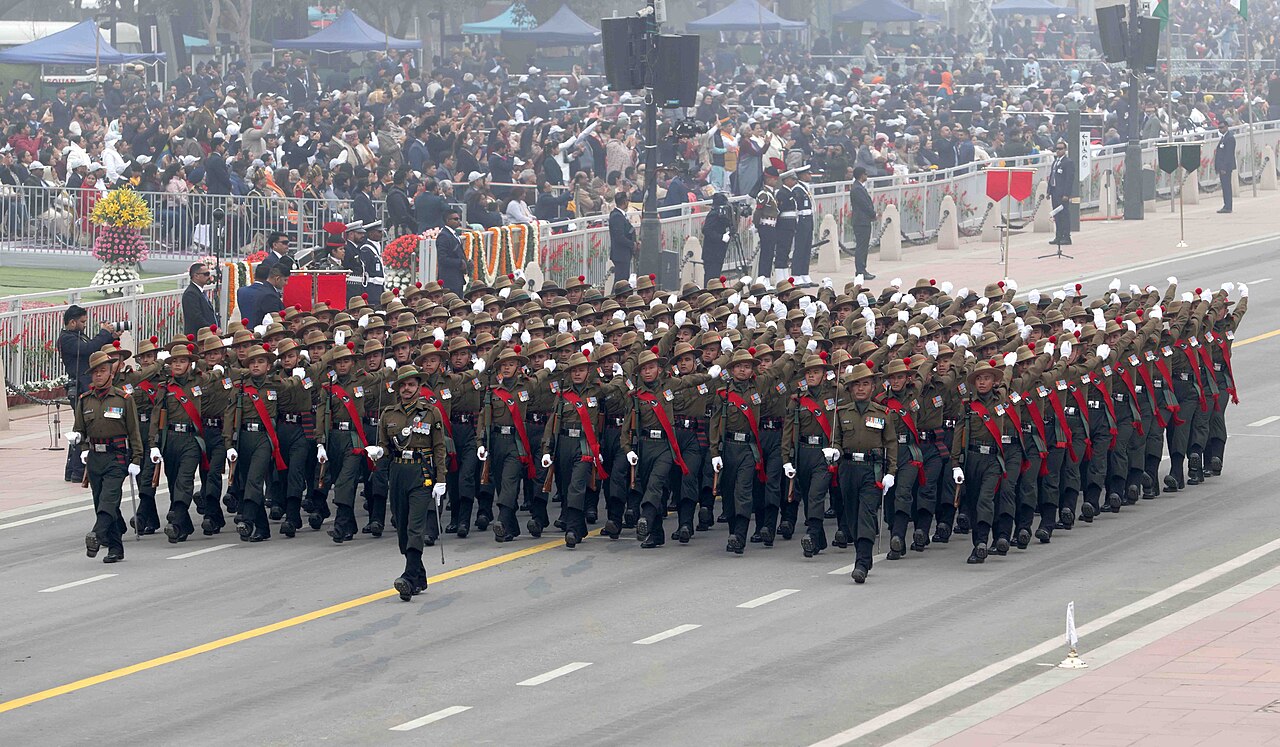
Rawat had spent his career in tough postings — high-altitude warfare, counter-insurgency, and command along India's most sensitive frontiers. He was known for plain speaking and a hands-on, front-line style. To the troops, he was a soldier who understood the soldier's world from the inside.[1]
A tragic loss
On 8 December 2021, General Rawat, his wife Madhulika Rawat, and several armed forces personnel were killed when their helicopter crashed near Coonoor in the Nilgiri hills of Tamil Nadu.[1] The nation was stunned. India had lost its first CDS in the middle of the very reforms he had been brought in to drive.
The grief was immense and genuine — a reminder that those at the very top of the military are, in the end, soldiers too, and that service carries risk at every rank.
The work continues
The institution Rawat helped create did not die with him. The post of Chief of Defence Staff continues, and the long, difficult march toward integrated theatre commands and true jointness goes on — part of a broader modernisation that includes self-reliant defence, new technology, and a leaner, more lethal force.
In a sense, Rawat's legacy is the most demanding kind: not a monument, but a reform still being built. The Indian military of the coming decades — more integrated, more modern, more self-reliant — will carry his fingerprints.
My poems are usually about the soldier at the edge of the map. But the soldier at the edge can only succeed if those at the centre have built the right structures behind him. General Bipin Rawat spent his final years trying to build exactly that, and gave his life still in harness. That, too, is a form of the quiet, total service this book was written to remember.
Sources & further reading
- "Bipin Rawat," Wikipedia.
- Press Information Bureau (PIB), Government of India — pib.gov.in.
All images via Wikimedia Commons, used under the licences shown in each caption.