Heroes · Leadership
Field Marshal K. M. Cariappa: The Man Who Took Command
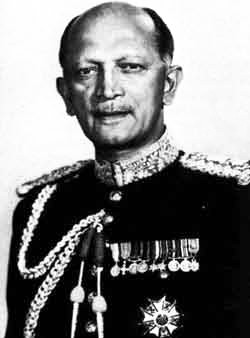
Every institution needs a first — someone who steps into a role no one of their kind has held before, and by holding it with dignity, makes it possible for everyone who follows. For the Indian Army, that person was Field Marshal Kodandera Madappa Cariappa, the first Indian to command it.
His story is not one of a single famous battle, but of something rarer: the quiet, steady work of building an army worthy of a free nation. It is the kind of foundational service that my book tries to honour — the guardianship that earns no spotlight but makes everything else possible.
From Coorg to command
Cariappa was born in 1899 in Coorg (Kodagu), in present-day Karnataka, into a land famous for sending its sons into the army. He was among the first generation of Indians commissioned as officers in the British Indian Army, at a time when the highest ranks were reserved almost entirely for the British.[1]
Through decades of service he rose steadily, earning a reputation for professionalism, fairness, and an unshakeable belief that the army must stand above politics, religion and region — that it belonged to the nation as a whole. He was affectionately known as "Kipper," a nickname that stuck through his long career.
The day an Indian took over
On 15 January 1949, Cariappa took over as the first Indian Commander-in-Chief of the Indian Army from General Sir Roy Bucher, the last British officer to hold the post.[1] It was a moment of profound symbolism: barely a year and a half after Independence, the army that had been an instrument of empire now answered to one of India's own.
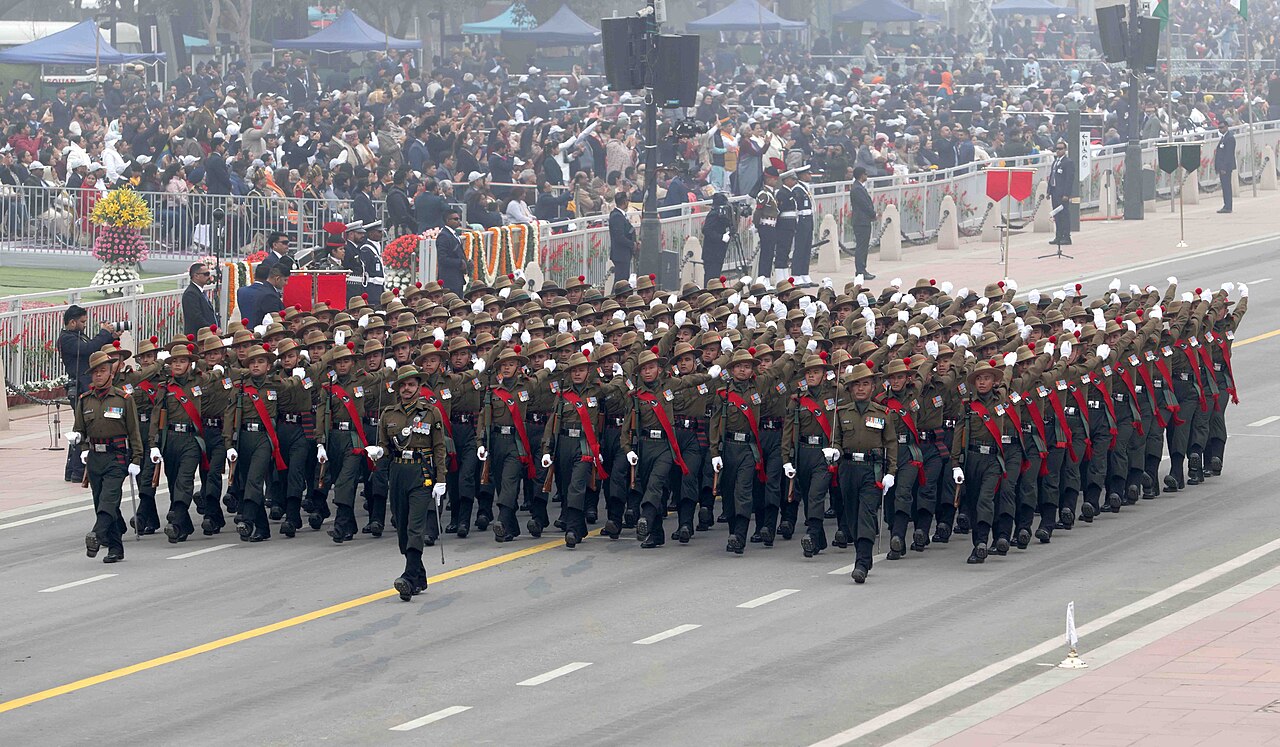
That date is why India observes Army Day every 15 January — not to mark a victory, but to mark the moment the nation took full command of its own defence.
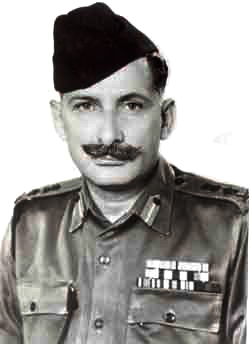
Remember us not as heroes craving fame, but as sons who bore the weight of a motherland.
The war in Kashmir
Cariappa's command was not ceremonial. He had already played a central role in the 1947–48 war over Kashmir, directing operations that pushed back the raiders and stabilised the front. As C-in-C, he inherited the enormous task of welding the post-Partition army — its regiments divided, its men scattered across a newly drawn border — into a coherent, disciplined national force.[1]
He insisted on professionalism over favouritism, on merit over connection, and on the absolute principle that the soldier serves the Constitution and the country, never a party or a person. Much of the apolitical, professional character that the Indian Army is admired for today traces back to the standards Cariappa set in those formative years.
The honour of a Field Marshal
In 1986, in recognition of his towering contribution, Cariappa was conferred the rank of Field Marshal — only the second Indian, after Sam Manekshaw, to be so honoured.[1] A Field Marshal never retires; he holds the rank for life. It was a fitting tribute to a man who had given his whole life to the service.
There is a famous story from the 1965 war, when Cariappa's own son, an air force pilot, was shot down and captured by Pakistan. Pakistan's leader, who had once served under Cariappa, reportedly offered to release the young man as a special gesture. Cariappa refused, saying that his son was no different from any other prisoner, and that all of them should be treated alike. He would accept no special treatment. It is hard to imagine a clearer statement of what he believed an officer should be.
The foundation beneath the flag
It is easy to celebrate the soldier who storms a hill or flies a daring sortie. It is harder, but just as important, to honour the builder — the leader who lays the foundations on which all that later courage stands. Cariappa was that builder.
Every disciplined parade, every apolitical posting, every soldier who salutes the flag rather than a faction, owes something to the standards he established at the very beginning. He took command of an army in its infancy and handed on something solid, professional and proud.
When we speak of "the unsung breath of heroes," we usually mean the soldier in the trench. But there is an unsung heroism in institution-building too — in the patient, unglamorous work of making something that will outlast you. On Army Day each 15 January, when the nation honours its soldiers, it is also honouring the quiet first step taken by Kipper Cariappa, the man who took command.
Sources & further reading
- "K. M. Cariappa," Wikipedia.
- Indian Army, official records — indianarmy.nic.in.
All images via Wikimedia Commons, used under the licences shown in each caption.