Geopolitics · The Indian Ocean
China's String of Pearls: and India's Response
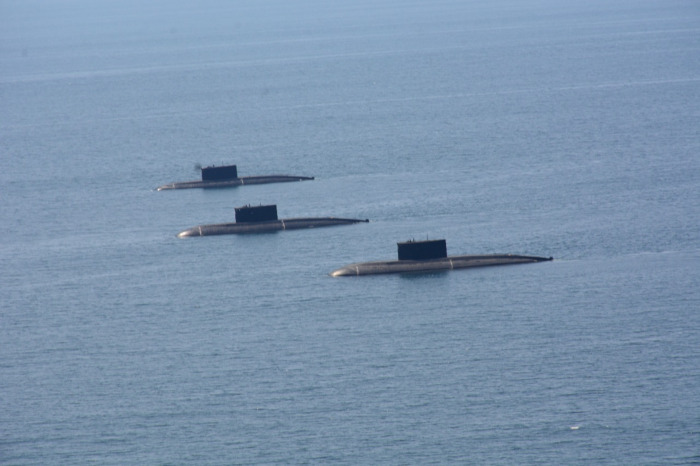
From the Persian Gulf to the South China Sea, China has spent two decades building, financing and operating a chain of ports along the world's busiest trade routes. Strategists call it the String of Pearls — and almost every pearl sits in India's maritime neighbourhood.
A chain of ports
The phrase describes a pattern: Chinese-funded harbours and facilities arcing across the Indian Ocean — Gwadar in Pakistan, Hambantota in Sri Lanka, terminals in Bangladesh and Myanmar, and a military base in Djibouti. Each is justified commercially. Together, they trace a line around India.[1]
Whoever can watch the ocean can hold a hand on the world's supply lines.
Trade, debt and leverage

Many pearls grew out of the Belt and Road Initiative. When Sri Lanka could not service its loans, it handed Beijing a 99-year lease on Hambantota in 2017 — a cautionary tale of how commercial ports can become strategic leverage. A harbour built for containers can, in a crisis, host warships.
India's answer
India has responded with what some call a Necklace of Diamonds: developing Chabahar in Iran, securing access to Duqm in Oman and Sabang in Indonesia, deepening ties with island states like the Maldives and Seychelles, and expanding the Indian Navy. The logic is symmetry — presence answered with presence.
The contest below the waves
The competition is not only about harbours but about information and reach: undersea surveillance, satellite tracking, and the ability to monitor the choke points through which energy flows. Whoever can watch the ocean can, in effect, hold a hand on the world's supply lines.
Why it matters
For a nation that imports most of its oil by sea, the Indian Ocean is not a distant theatre — it is a lifeline. The String of Pearls is a reminder that India's security is increasingly maritime, decided on shipping lanes as much as on the Himalayan frontier.
Sources & further reading
- "String of Pearls (Indian Ocean)," Wikipedia.
All images via Wikimedia Commons, used under the licences shown on each file page.