Heritage · India Gate
India Gate and the Eternal Flame
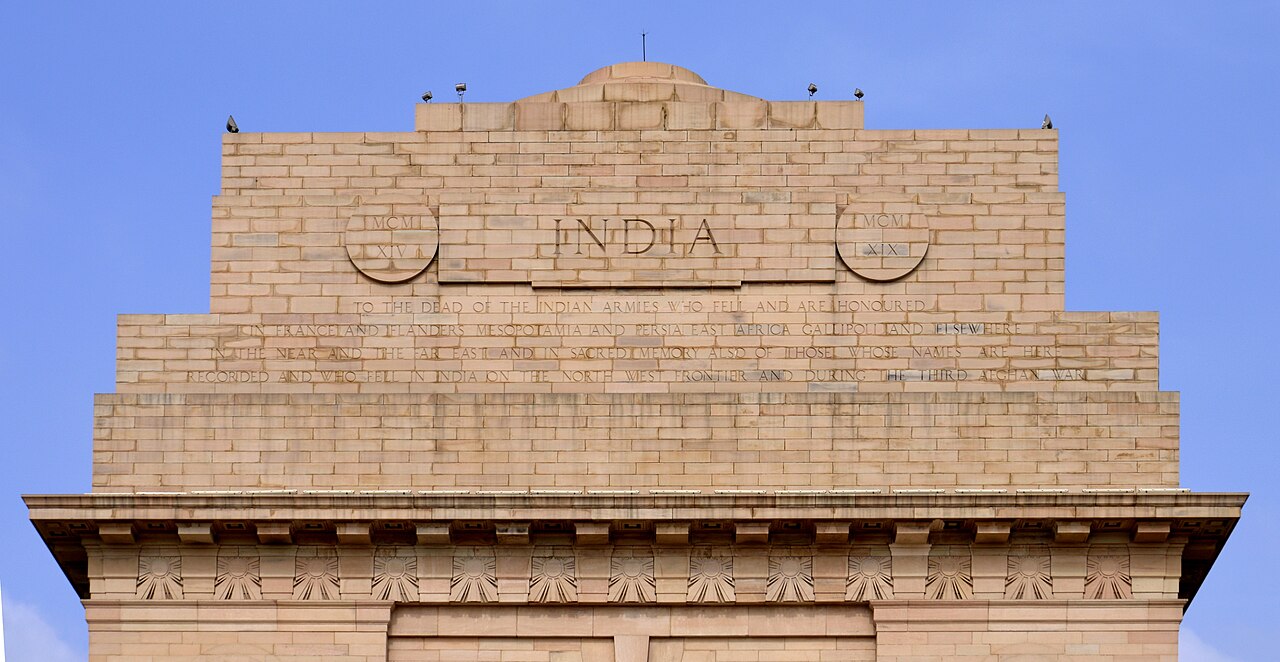
Few monuments are as woven into a nation's imagination as India Gate. For a century it has stood at the heart of New Delhi; for fifty years its eternal flame, the Amar Jawan Jyoti, burned in honour of the soldier with no name. Its story is the story of how India learned to grieve its fallen.
My poem Echoes in the Embers imagines a child standing before just such a flame, holding a fallen father's medal.
An arch of memory
India Gate was built in the 1920s, designed by the architect Edwin Lutyens, as a memorial to the soldiers of the British Indian Army who died in the First World War and the Third Anglo-Afghan War. The names of thousands of them are inscribed upon its sandstone.[1]
For decades it was simply a grand arch and a much-loved gathering place. Then, after the 1971 war, it gained a deeper purpose.
This flame, a sentinel of flickering hopes, casts long the stories we tether to our ropes.
The flame for the unknown soldier
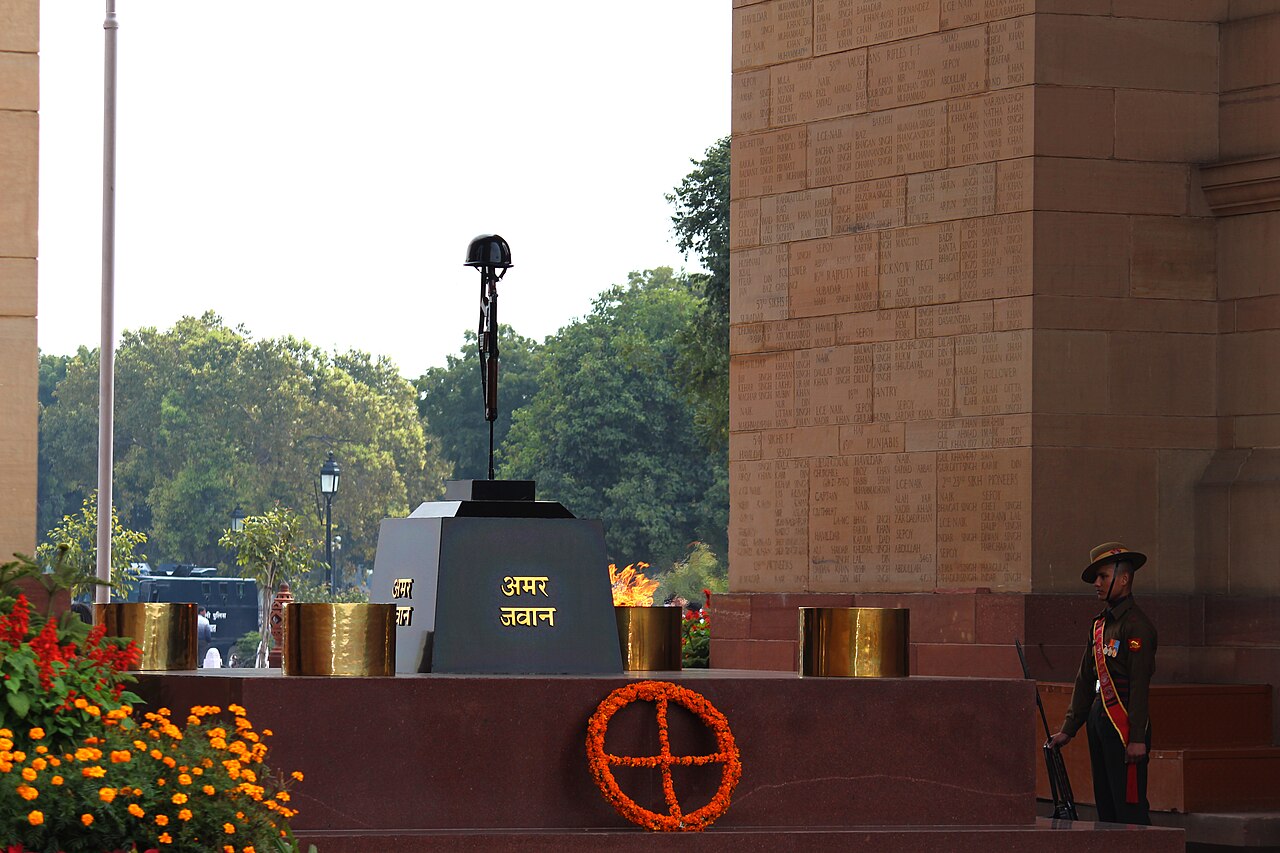
In 1972, the Amar Jawan Jyoti — the "Flame of the Immortal Soldier" — was installed beneath the arch: an eternal flame honouring India's unknown soldiers, those who fell without their sacrifice ever being individually recorded.[1] For half a century, it was the place the nation came to remember.
A flame that found a new home
On 21 January 2022, the flame of the Amar Jawan Jyoti was ceremonially merged with the eternal flame at the new National War Memorial nearby.[1] The move was debated — many had grown up saluting the India Gate flame — but its logic was that independent India's soldiers should be honoured at a memorial built for them, rather than under a colonial-era arch.
The fire did not go out; it was carried to a place built to receive it. India Gate still stands, magnificent against the Delhi sky, and the flame still burns — only now beside the names of the very soldiers my poems were written to remember. As Echoes in the Embers puts it, it remains "a beacon of valor, an everlasting flame."
Sources & further reading
All images via Wikimedia Commons, used under the licences shown in each caption.