History · Remembrance
The National War Memorial: How India Finally Built a Home for Its Heroes
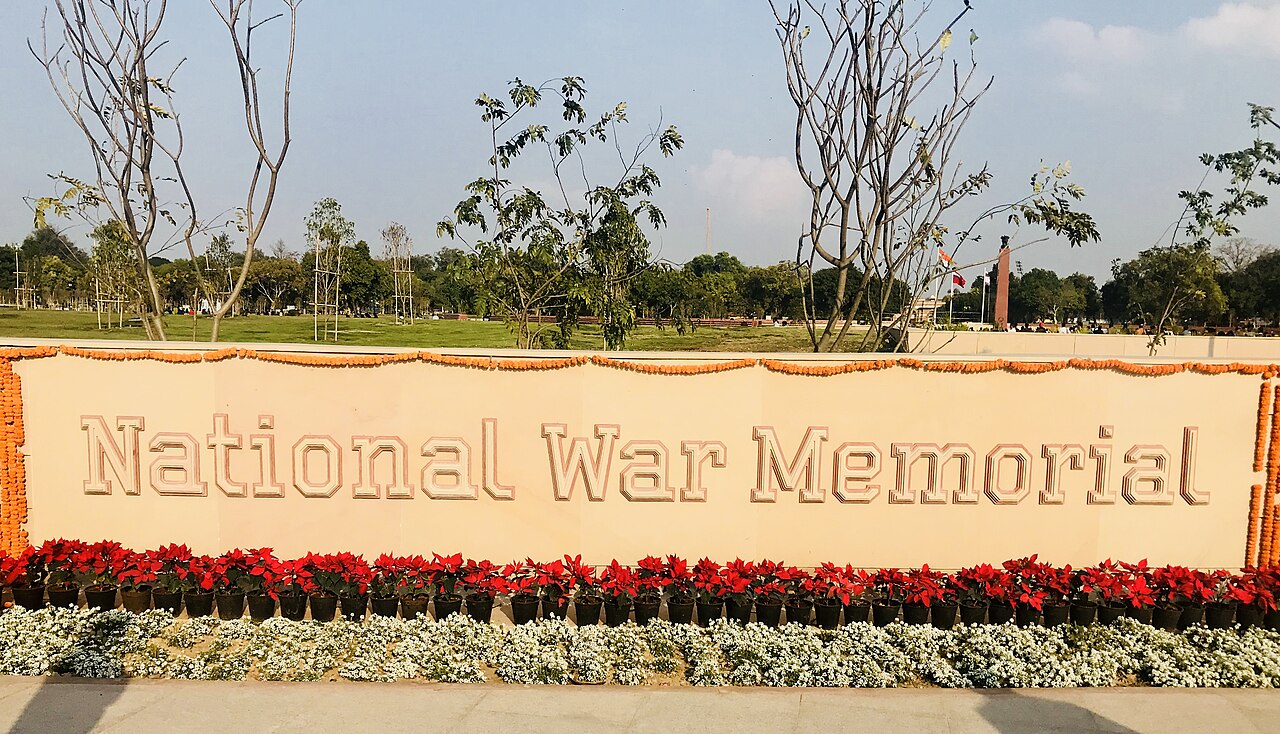
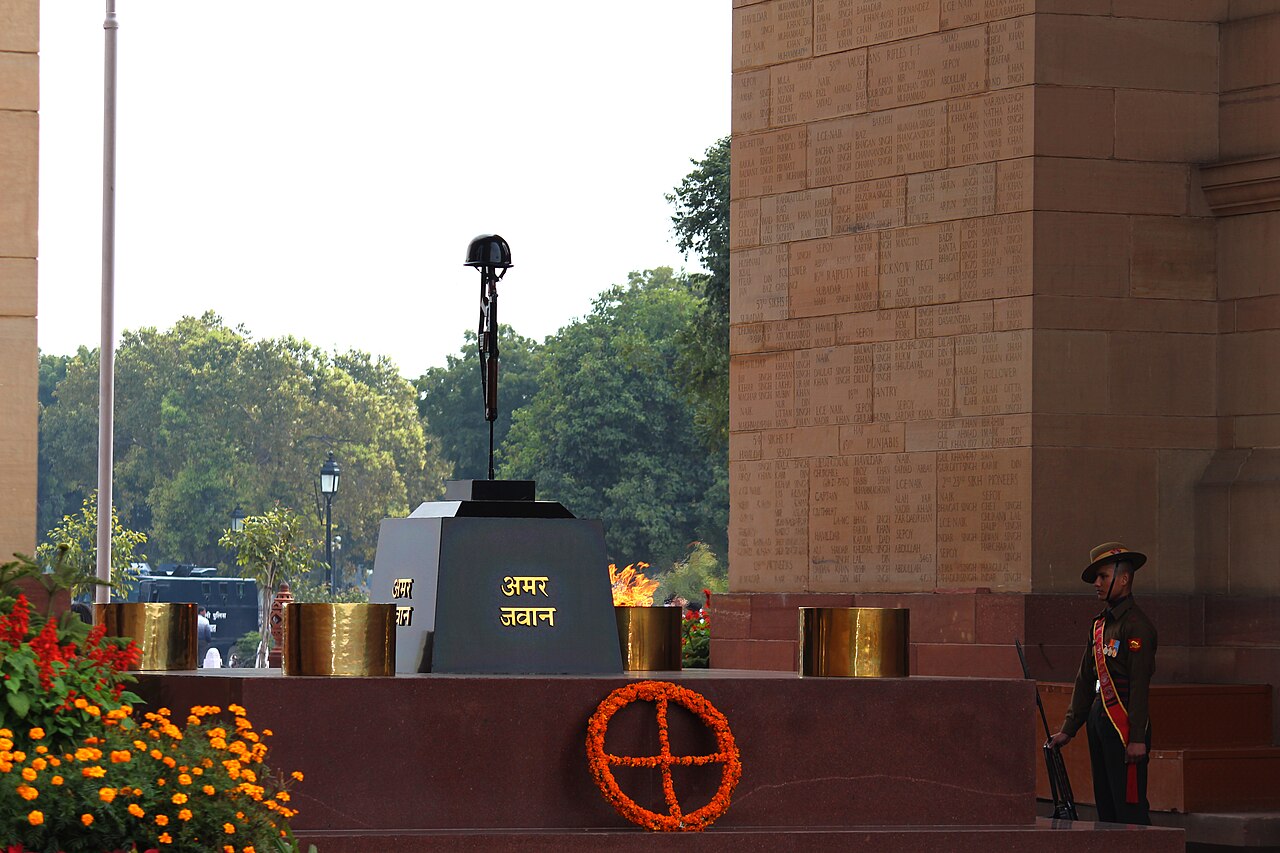
For seventy-two years after Independence, India fought wars, lost tens of thousands of soldiers, and yet had no national monument of its own to grieve them. The flame most of us grew up saluting — the Amar Jawan Jyoti beneath the arch of India Gate — burned under a memorial the British had raised to their own losses in the First World War and the Third Anglo-Afghan War.[1] It was a borrowed shrine. The men and women who died defending a free India in 1947, 1962, 1965, 1971, Siachen, and Kargil had no address of their own.
That changed on 25 February 2019, when Prime Minister Narendra Modi inaugurated the National War Memorial and lit its eternal flame, spread across roughly forty acres of the India Gate complex in New Delhi.[2] For the first time, the Republic had built — deliberately, monumentally — a place that says: this is where we keep our fallen.
A nation reveals what it loves by what it chooses to remember in stone.
A memorial seven decades in the making
The demand for a dedicated war memorial was nearly as old as independent India itself, raised repeatedly by veterans and successive service chiefs. The design that finally won emerged from a global architectural competition announced in 2017; the chosen concept came from Yogesh Chandrahasan of the Chennai-based studio WeBe Design Lab.[3] What he produced was not a single triumphal arch but something quieter and more deliberate — a memory you walk into, organised as four concentric circles, each carrying a distinct idea.
Reading the four circles
To move through the National War Memorial is to pass inward through four chakras, from protection at the edge to immortality at the heart.
Rakshak Chakra — the Circle of Protection
The outermost ring is a dense line of trees, each one standing, in the memorial's symbolism, for a soldier guarding the nation's borders. It is the threshold: a living wall of green that quiets the traffic of central Delhi and prepares the visitor for what waits within.
Tyag Chakra — the Circle of Sacrifice
Here are the granite walls that give the memorial its terrible weight. Arranged in concentric rows, they carry the names of the fallen etched in golden letters — the personnel of the Army, Navy, and Air Force killed in service since 1947. At its inauguration the memorial recorded the names of 25,942 soldiers, a figure that, heartbreakingly, is designed to be added to.[2] To stand before these walls is to understand a single statistic made human, name by name by name.
Veerta Chakra — the Circle of Bravery
A covered gallery of bronze murals depicts iconic battle actions of the Indian armed forces — among them the stand at Longewala and the Navy's Operation Trident — translating raw courage into images a visitor can stand before and study.[1]
Amar Chakra — the Circle of Immortality
At the very centre rises the obelisk and the eternal flame — the Amar Jyoti — burning without pause for those whose sacrifice the nation refuses to let die. Everything in the memorial leads here, to a single point of fire against the sky.
The flame that moved
For nearly fifty years, the Amar Jawan Jyoti at India Gate — installed after the 1971 war — had been the country's symbolic resting place for the unknown soldier. On 21 January 2022, that flame was ceremonially merged with the eternal flame at the new National War Memorial.[1] The decision drew debate: some felt a beloved landmark was being dimmed. But the logic was simple and, to many veterans, overdue — the soldiers of independent India would now be honoured at a memorial built for them, not under a colonial arch inscribed with the names of a different empire's wars.
It is a small, profound correction of memory. The fire did not go out; it found its true home.
Beyond the four circles
The memorial complex holds more than the chakras. Close by stands the Param Yoddha Sthal — the "Place of the Supreme Warriors" — a tree-lined walk lined with the bronze busts of the twenty-one recipients of the Param Vir Chakra, India's highest gallantry award.[1] To pass from the wall of twenty-six thousand names to a quiet avenue of twenty-one faces is to feel the two scales of sacrifice the memorial holds in balance: the vast and the individual, the multitude and the man.
The National War Memorial is also a working place of ritual, not just a monument to be photographed. A ceremonial wreath-laying takes place here on national occasions, and visiting heads of state are received at its flame rather than at the old India Gate arch — a deliberate signal of where the Republic now locates its deepest reverence. Touch-screen kiosks let families search for the name of a relative and find exactly where, on which granite wall, it is inscribed. For a war widow or an ageing parent, that is not a tourist feature; it is the difference between an abstraction and a place to lay a hand.
Why a memorial matters
It is tempting to think of monuments as the opposite of living things — cold, finished, fixed. The National War Memorial argues otherwise. Its outer ring is made of growing trees. Its walls are designed to receive new names. Its flame is tended daily. It is less a full stop than an open sentence, one the nation keeps writing every time a soldier does not come home.
There is wisdom, too, in what the memorial chose not to be. It is not a towering arch of conquest or a triumphal column counting victories. It is a low, open, circular space you descend into and walk through — closer in spirit to a place of prayer than a parade. That humility feels deliberate. The armed forces it honours do not, for the most part, seek glory; they seek to do their duty and come home, and when they cannot, they ask only to be remembered. A memorial that makes you slow down, lower your voice, and read names rather than crane your neck at a monument is a memorial that has understood the people it serves.
As a writer drawn again and again to the lives of the armed forces, I find that the memorial does what I hope poetry can do: it refuses the comfort of the abstract. "The fallen" is a phrase; 25,942 names cut into granite is a confrontation. Both the memorial and the poem insist that behind every line of a battle report there was a person — a son, a daughter, a letter half-written, a future quietly surrendered.
If you are ever in Delhi, go at dusk, when the flame is brightest against the dark and the names catch the last of the light. Walk inward through the four circles. Read a few of the names aloud. That, in the end, is what the memorial asks of us — not grand mourning, but attention. To remember, deliberately, what freedom cost. A nation that builds such a place is making a quiet promise to its soldiers: that whatever they give, they will not be forgotten. The least the rest of us can do is help it keep that promise.
Sources & further reading
- "National War Memorial (India)," Wikipedia — overview, the four chakras, and the 2022 merger of the Amar Jawan Jyoti.
- National War Memorial, official portal, Ministry of Defence, Government of India — nationalwarmemorial.gov.in (inauguration date and inscribed names).
- Press Information Bureau (PIB), Ministry of Defence — releases on the National War Memorial design competition and inauguration, pib.gov.in.
Image credits. Header: "National War Memorial, New Delhi, India" by Sanket Oswal, licensed under CC BY-SA 4.0. In-text: "Amar Jawan Jyoti at India Gate" by KCVelaga, licensed under CC BY-SA 4.0. Both sourced from Wikimedia Commons and used with attribution under their respective licences. No endorsement by the authors is implied.