Defence · Deterrence
Agni: The Missiles That Guard India's Peace
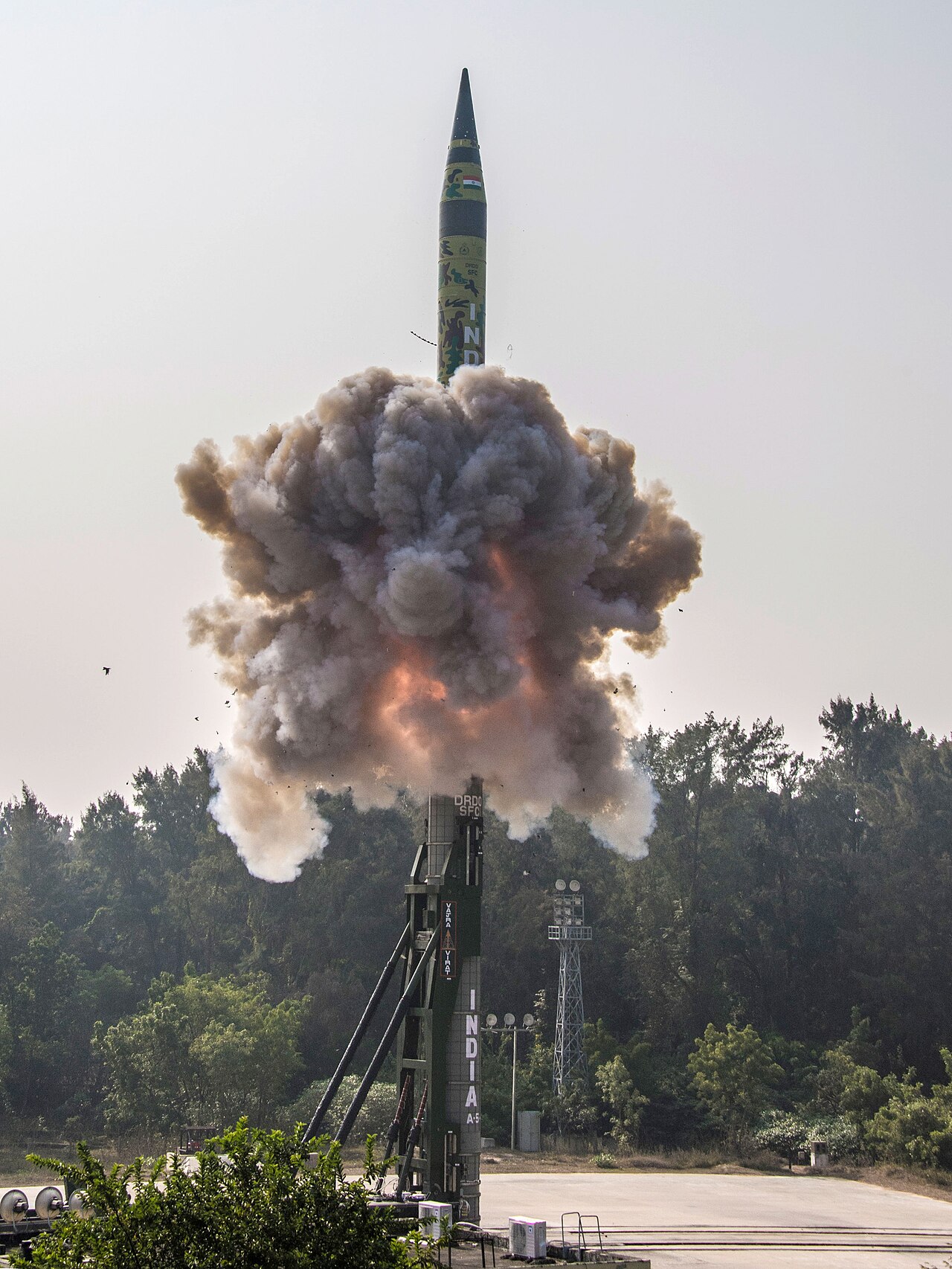
There is a strange paradox at the heart of national defence: that some of the most powerful weapons a nation builds exist precisely so that they will never be used. India's Agni missiles — named for the Vedic god of fire — are exactly such weapons. They are the silent guarantors of a peace held in place by deterrence.
My poetry dwells on the human cost of war. This article looks at the machinery built to prevent the worst war of all.
The Missile Man's dream
India's missile capability grew out of the Integrated Guided Missile Development Programme (IGMDP), launched in the 1980s and led by the scientist A. P. J. Abdul Kalam — later the President of India, and forever remembered as the "Missile Man."[1] The programme aimed to give India the ability to design and build its own missiles, rather than depend on foreign suppliers who could cut off access at any moment.
The Agni series was its most strategically important product: a family of land-based ballistic missiles capable of carrying India's nuclear deterrent over long distances.[1]
The roots of freedom lie buried in loss, every victory forged from what it costs.
A family that grew with the nation
The Agni programme advanced step by step, each version reaching further than the last. From the early Agni-I and Agni-II, through the intermediate ranges, to the long-range Agni-V — capable of striking targets thousands of kilometres away — the series steadily extended the reach of India's deterrent.[1] Newer variants such as Agni-P bring greater accuracy, mobility and survivability.
Crucially, these are Indian missiles — designed, built and tested at home, by the DRDO and Indian industry. Each successful test is not only a military milestone but a statement of technological independence.

The doctrine behind the fire
India's nuclear posture is built on two principles that shape how the Agni missiles are meant to be used — which is to say, not used at all if it can possibly be avoided. The first is "credible minimum deterrence": maintaining just enough capability to make any nuclear attack on India unthinkably costly for the attacker.[2]
The second is the policy of "no first use" — a commitment that India will not be the first to launch nuclear weapons, but will retain the assured ability to retaliate devastatingly if attacked.[2] Together, these turn the Agni missiles into instruments of restraint: weapons whose entire purpose is to ensure that no one ever dares to start the war they are built to answer.
Deterrence as a kind of peace
It is uncomfortable to think of peace resting on the threat of terrible force. And yet, for the nuclear age, deterrence has been one of the things that has kept the gravest wars from happening. The Agni missiles sit in their silos and on their launchers not to be fired, but to make firing pointless — to hold the balance so steady that the peace endures.
This is a colder, more abstract kind of guardianship than the soldier on the ridge. There is no folded flag, no last letter home. But the scientists, engineers and strategic forces personnel who build and keep these weapons are guardians too, in their way — custodians of a deterrent that, by existing, helps ensure the nation is never tested at its most catastrophic level.
My book is full of the human cost of the wars that do happen. The Agni programme is part of the machinery meant to prevent the one war from which there would be no poems left to write. Its fire is named for a god — and its deepest purpose is to make sure that fire is never lit.
Sources & further reading
All images via Wikimedia Commons, used under the licences shown in each caption.