Defence · Reform
The Soldier Question: Agnipath and the Remaking of the Indian Military
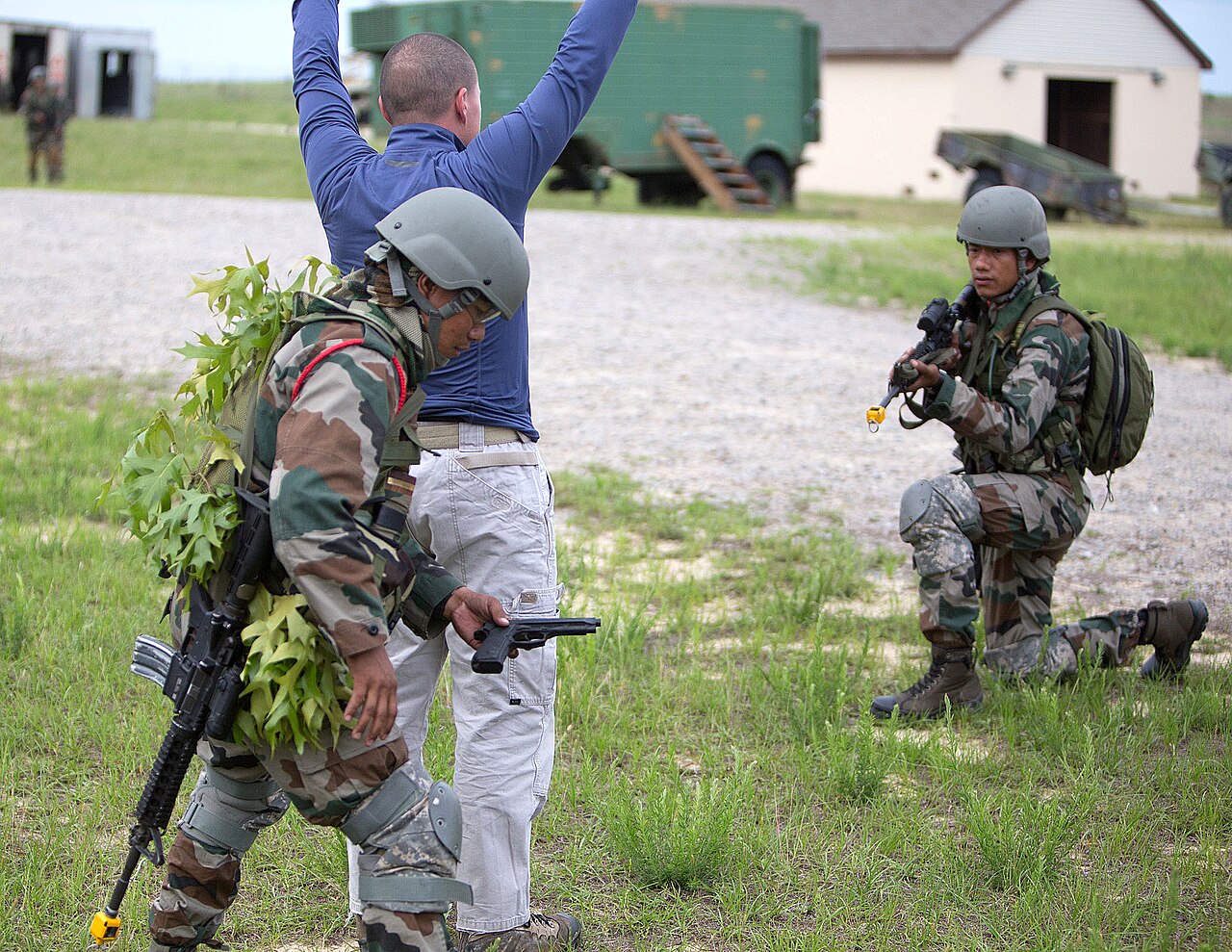
Every army rests, in the end, not on its weapons but on its people — on the soldiers who carry the rifles, hold the posts, and, when the moment comes, are willing to die. How a nation recruits those soldiers, how long it keeps them, how it trains and motivates and rewards them, and what it owes them when their service ends, are among the most consequential decisions any military makes. Change the answer to the soldier question, and you change the army itself — its character, its cohesion, its fighting spirit, and its cost.
India has changed that answer. Through the reform known as Agnipath — a Hindi word meaning "the path of fire" — it has fundamentally altered how it recruits soldiers into its armed forces, replacing a system of long, career-length service with one built around short-term enlistment, in which most recruits serve a few years and then return to civilian life. The reform was born of hard fiscal pressures and a genuine argument about the shape of a modern military, and it ignited one of the fiercest controversies in recent Indian public life, with young aspirants protesting in the streets. Behind the uproar lie deep questions — about the burden of military pensions, the youthfulness of the fighting force, the sanctity of regimental tradition, and, ultimately, about what kind of army India wants to be. This is the story of the soldier question, and of India's contested attempt to answer it anew.
What Agnipath is
At its core, Agnipath is a new model of recruitment for the ranks of India's armed forces — for the soldiers, sailors and airmen below officer level. Under the scheme, young recruits, called Agniveers ("fire warriors"), are enlisted for a fixed short term of a few years. At the end of that term, a portion of them — a minority — are selected to continue in regular, long-term service, while the majority are released back into civilian life with a payment and certificate, but without the pension and lifelong benefits that traditionally came with a full military career.[1]
This represents a profound departure from the traditional system, under which a soldier who enlisted would typically serve a long career of many years, retiring with a pension that continued for the rest of his life. Under that older model, recruitment was essentially for a career; under Agnipath, it is, for most, for a short term, with only a fraction converting to the long-service career that was once the norm for all. The change is structural and far-reaching, altering the fundamental terms on which India recruits the people who fill the ranks of its military.
The reform applies across the armed forces and reshapes the entire pipeline of military manpower at the level of the ranks. It changes who is recruited, how long they serve, what they are paid and owed, and what becomes of them afterward. Its stated aims are several — to make the force younger, to reduce the long-term burden of pensions, to create a pool of trained and disciplined young citizens, and to modernise the profile of the military — and it is these aims, and the trade-offs they involve, that lie at the heart of the fierce debate the reform provoked. To understand that debate, one must understand the pressures that gave rise to the reform in the first place.
The pension mountain
The most powerful force behind Agnipath is a fiscal one, and it can be captured in a single word: pensions. Over decades, the cost of paying pensions to the vast number of military retirees — soldiers who served full careers and then draw a pension for the rest of their lives — has grown into an enormous and rising burden on the defence budget. This pension bill consumes a large and growing share of the money allocated to defence, and it does so as a fixed obligation that must be paid regardless of any other need.[2]
The problem this creates is one of budget structure, and it is genuinely serious. A defence budget is broadly divided between revenue spending — the running costs of salaries, pensions, maintenance and operations — and capital spending — the money to buy new weapons, equipment and platforms that modernise the force. When pensions and other running costs consume an ever-larger share of the budget, less is left for capital spending on modernisation, and the military risks becoming a force that can pay its retirees but cannot afford the new equipment it needs to fight. The pension burden, in this sense, crowds out the future.
This is the fiscal logic at the heart of Agnipath. By enlisting most soldiers for a short term without the lifelong pension that a full career brings, the reform aims, over time, to reduce dramatically the future pension burden, freeing resources for modernisation and equipment. If most recruits serve a few years and leave without a pension, the enormous long-term liability of paying lifelong pensions to millions is greatly reduced, and the budget can shift toward the capital spending that modernisation requires. Whatever else it is, Agnipath is fundamentally an attempt to solve the pension problem — to break the cycle in which the cost of the past crowds out the investment in the future.
The argument for a younger force
Alongside the fiscal argument runs a second, about the age and vigour of the fighting force. Proponents of Agnipath argue that a system of long careers tends, over time, to produce an older force — that as soldiers serve for many years, the average age of the troops rises, and an ageing force is, other things being equal, less physically fit and less suited to the extreme demands of modern combat, particularly in the harsh terrain and high altitudes where much of India's soldiering takes place.[3]
A short-service model, the argument goes, keeps the force young. If most soldiers serve only a few years before being replaced by new young recruits, the average age of the troops falls, and the force becomes more physically fit, more energetic, and better suited to the rigours of combat. Youth brings physical resilience, adaptability, and — proponents suggest — a readiness to embrace new technology and new ways of fighting. A younger force, in this view, is a fitter and more dynamic force, better prepared for the demands of contemporary war.
There is a further dimension to this argument, concerning technology. A younger, more frequently refreshed force, proponents suggest, may be more comfortable with the rapidly advancing technology of modern war — the drones, the networks, the digital systems that increasingly define the battlefield — since younger recruits are often more fluent in technology and more adaptable to new tools. A military that constantly brings in young, tech-savvy recruits may be better able to absorb and exploit new technology than one whose ranks are filled with long-serving veterans. Whether this holds in practice is contested, but it is part of the case for a younger, more frequently renewed force that underlies the reform.
The path of fire: the protests
Agnipath, however logical to its architects, ignited a fierce and immediate controversy, and no honest account can pass over the anger it provoked. When the reform was announced, it triggered widespread protests, particularly among the young men who traditionally aspired to military careers, many from communities and regions with deep traditions of army service. For these aspirants, the change was a bitter blow: the prospect of a secure, career-length military job with a lifelong pension — long a cherished path to stability and status — was replaced by a short-term enlistment from which most would emerge after a few years without the career or the pension they had hoped for.[1]
The protests were intense and, in places, turned destructive, reflecting the depth of feeling the reform stirred. For generations, military service had been not only a matter of duty and pride but a route to economic security and social standing, especially in regions where army recruitment was a central part of life and livelihood. The reform seemed, to many aspirants and their families, to take away that security — to offer a few years of service and then an uncertain return to civilian life, without the pension and the settled career that had made military service so prized. The anger was, in large part, the anger of dashed expectations and lost security.
The government defended the reform and made some adjustments in response to the outcry — measures to reassure aspirants, to broaden the opportunities for released Agniveers, and to address some of the concerns raised. But the controversy revealed the profound social and human dimensions of the soldier question, which are not merely matters of fiscal efficiency or force structure but touch the livelihoods, aspirations and identities of many. The reform's fiscal and military logic collided with the human reality of what military service meant to those who sought it, and that collision is at the heart of the enduring debate over Agnipath.
The regimental soul
Among the deepest concerns raised by critics of Agnipath is its potential effect on one of the Indian Army's most treasured institutions: the regimental system. The Indian Army is organised, in large part, around regiments with long histories, distinct identities and fierce internal loyalties — units bound together by shared tradition, often by common regional or community origins, and by the intense bonds forged among soldiers who serve together for years. This regimental spirit — the loyalty to the unit, the pride in its history, the brotherhood among its soldiers — is widely regarded as a vital source of the army's fighting effectiveness and cohesion.[3]
The concern is that a system of short-term enlistment could erode this regimental soul. If most soldiers serve only a few years and then leave, replaced by a constant flow of new recruits, the deep bonds and loyalties that build up over long careers of shared service may weaken. The intense cohesion that comes from soldiers serving together for years, knowing they will continue to do so, might be harder to sustain in a force where most members are transient. Critics fear that the regimental system, and the fighting spirit it fosters, could be damaged by the constant turnover that short service implies.
This concern reaches to the heart of what makes an army fight, for the bonds among soldiers — the unwillingness to let down one's comrades, the trust built over shared hardship, the loyalty to the unit — are among the most powerful forces in combat, often more powerful than any abstract cause. A reform that risks weakening these bonds risks touching the very source of an army's fighting power. Proponents argue that the effect can be managed and that cohesion can be maintained even with shorter service, and that the retained core of long-service soldiers preserves the regimental backbone; critics remain unconvinced. This debate over the regimental soul is among the most serious raised against Agnipath, precisely because it concerns not budgets or ages but the intangible spirit that makes soldiers fight.
The motivation question
Closely related is a concern about motivation — about whether soldiers who know that most of them will serve only a few years, without the prospect of a full career and pension for all, will be as motivated, as committed, as willing to endure hardship and risk their lives, as those who enlisted for a career. This is a subtle but profound question, for the willingness of soldiers to face danger and death depends heavily on their motivation, their sense of commitment, and their stake in their service.[3]
Critics worry that short-term recruits, aware that they are likely to be released after a few years and competing among themselves for the minority of positions that convert to long service, might be less deeply committed to the military and its ethos, more focused on their individual prospects, and less bound by the lifelong dedication that a career soldier feels. The intense identification with the military as a lifelong calling, they fear, might give way to a more transactional relationship — a few years of service rather than a life dedicated to arms — with consequences for motivation and fighting spirit.
Proponents counter that the competition to be among those retained could itself be a powerful motivator, driving Agniveers to perform at their best, and that young recruits serving their nation, well trained and led, will fight with the courage and commitment Indian soldiers have always shown. They point out that many militaries around the world operate with substantial short-service components and fight effectively, and that motivation depends on training, leadership and ethos as much as on length of service. The truth is that the effect of the reform on motivation cannot be known with certainty in advance; it is one of the genuine uncertainties of the reform, and one that only experience will resolve. But the question is real, and it weighs heavily in the debate.
The training compression
A further practical concern is time — specifically, whether a few years of service is enough to train a soldier fully and to reap the benefit of that training before he is released. Training a soldier, especially for the specialised and technical roles of a modern military, takes time, and a soldier becomes most valuable after years of experience, when his training is complete and his skills are honed. Under a short-service model, critics argue, much of a recruit's brief term may be spent in training, leaving less time for productive service before release, and the military may lose soldiers just as they become most capable.[3]
This concern is sharpest for the more technical and specialised roles. A rifleman might be trained relatively quickly, but a soldier operating complex equipment, a technician maintaining sophisticated systems, or a specialist in a demanding skill may need extensive training and experience to become proficient — and if such a soldier is released after a few years, the investment in his training may not be fully recovered, and the military may face a constant challenge of replacing skilled personnel just as they reach their peak. The concern is that short service is ill-suited to the technical demands of a modern, increasingly complex military.
Proponents respond that the retained core of long-service soldiers can fill the roles requiring extensive experience, while the short-service Agniveers handle roles that can be trained more quickly, and that training can be made efficient and focused. They argue that the model can be managed to match length of service to the demands of different roles, keeping the specialists longer while accepting shorter service for others. Whether this balance can be struck effectively — whether the military can train and employ its people well within the constraints of the new model — is one of the practical tests of the reform, and it will be worked out in the experience of the coming years.
The fiscal prize and the capital squeeze
Returning to the fiscal heart of the matter, it is worth understanding just how significant the potential prize is, for it explains why the government pursued so controversial a reform. The Indian military's budget has long been squeezed between the rising cost of salaries and pensions on one hand and the pressing need for modernisation on the other, and the pension burden in particular has grown to consume a share of resources that alarms defence planners. A military that spends heavily on paying its retirees but cannot afford new equipment is a military mortgaging its future to its past.[2]
The modernisation needs are acute and were discussed throughout this journal — the fighters the Air Force needs, the ships and submarines the Navy seeks, the equipment the Army requires, the drones and technology the future demands. All of this requires capital spending, and capital spending is precisely what the rising tide of revenue costs, especially pensions, threatens to crowd out. The fiscal logic of Agnipath is to reverse this squeeze — to reduce the future pension burden so that more of the budget can flow to the modernisation the military desperately needs.
This is the prize that made the reform, for all its controversy, attractive to the government: the prospect of a leaner, more sustainable manpower cost structure that frees resources for the equipment and technology of a modern military. Whether the reform delivers this prize as intended, and at what cost to the other values at stake — cohesion, motivation, the aspirations of recruits — is the crux of the whole debate. The reform trades against these values for the fiscal benefit, and whether that trade is wise depends on how the benefits and costs actually unfold. But the fiscal motivation is real and serious, rooted in a genuine problem, and it cannot be dismissed as mere cost-cutting; it reflects a real dilemma about how to fund a modern military.
The released soldier: burden or dividend?
A central question raised by Agnipath concerns what becomes of the majority of Agniveers who are released after their short term — and here the reform's critics see a problem and its proponents a benefit. Each year, under the new model, a large number of trained, disciplined young people will leave the military after a few years and return to civilian life, still young, without a military career or pension. The question is whether this creates a problem — a stream of disappointed young people with military training but uncertain prospects — or a benefit — a pool of disciplined, trained, capable citizens who can contribute to society and the economy.[1]
Critics worry about the former. A large number of young people, trained in arms and discipline but released without secure employment, could face difficulties reintegrating into civilian life and finding suitable work, and some fear the social consequences of many trained young people entering an uncertain job market each year. The concern is that the reform solves the military's fiscal problem by creating a social one — shifting the burden from the defence budget to society, in the form of released veterans who may struggle to find their place.
Proponents argue the opposite: that released Agniveers represent a valuable national asset — disciplined, trained, physically fit young citizens who can bring their military-instilled values of discipline, teamwork and dedication to the civilian economy and society. The government has emphasised measures to help released Agniveers find employment, including preferences in various sectors and support for their transition, and has framed the reform as producing a stream of capable citizens who benefit the nation. Whether the released soldiers prove a burden or a dividend depends heavily on how successfully they are helped to transition and on the opportunities available to them — and this is one of the areas where the reform's success or failure will be most visible in the years to come.
Lessons from other nations
India is not the first nation to grapple with the soldier question, and its reform can be understood partly by reference to how other militaries manage their manpower. Around the world, militaries employ a wide range of models — some relying on long-service professionals, some on conscription of citizens for fixed terms, some on a mix of career soldiers and short-service or reserve personnel. Many effective militaries operate with substantial short-service components, in which recruits serve for a fixed period and then leave, providing a constant flow of young personnel while a professional core provides continuity and experience.[3]
These international examples offer both reassurance and caution to India's reformers. On one hand, they demonstrate that short-service models can work — that militaries can fight effectively with a substantial component of personnel serving fixed terms, and that a mix of short-service recruits and a career core can be a viable and even advantageous structure. Many respected militaries operate this way, suggesting that Agnipath's basic model is not inherently flawed. On the other hand, the international experience also shows that the details matter enormously — that the balance between short-service and career personnel, the length of service, the training, the terms and benefits, and the management of transitions all shape whether such a model succeeds or fails.
The lesson India draws, or should draw, is that the model can work but must be implemented well — that the success of Agnipath depends not on the basic idea, which has precedents around the world, but on the careful management of its many details and the willingness to adjust based on experience. The concerns about cohesion, motivation and training are real, but they can be mitigated by good implementation, and the international experience suggests that a well-designed and well-managed short-service model can produce an effective military. Whether India achieves such implementation is the open question, and it is why the reform is likely to evolve as its consequences become clear.
The broader modernisation of manpower
Agnipath, though the most visible and controversial element, is part of a broader effort to modernise how the Indian military manages its manpower, and understanding that larger context illuminates the reform's purpose. Modern militaries are increasingly recognising that raw numbers of soldiers matter less than the quality, training, technology and organisation of the force — that a smaller, better-equipped, better-trained and better-organised military can be more effective than a larger but less modern one. The trend across advanced militaries is toward leaner, more technological, more professional forces.[2]
This points toward a rethinking of the traditional emphasis on large numbers of soldiers. As technology — drones, precision weapons, advanced sensors, networks — increasingly shapes the battlefield, the value of sheer manpower may decline relative to the value of technology and the skilled personnel who wield it. A military that invests in technology and in the quality of its people, even at the cost of reducing raw numbers, may be more effective than one that maintains a large but less modern force. This logic, of trading quantity for quality and technology, is part of the broader thinking behind manpower reform.
Agnipath fits within this larger picture as one element of an effort to reshape the military for a modern age — to control manpower costs, to free resources for technology and modernisation, and to build a force whose effectiveness rests on quality and capability rather than sheer size. Whether this vision is realised depends on whether the resources freed by manpower reform actually flow to modernisation, and whether the reformed force retains the fighting effectiveness that its people, in the end, provide. The soldier question is thus bound up with the deepest questions of military modernisation — with what kind of force India needs for the wars of the future, and how it should balance people, technology and cost in building it.
The officer dimension
While Agnipath concerns the recruitment of soldiers in the ranks, the broader manpower challenge extends to the officers who lead them, and here India faces a distinct but related problem: a persistent shortage of officers. The Indian military has long operated with fewer officers than its sanctioned strength, a shortfall that places additional burdens on those serving and that reflects challenges in attracting and retaining enough young people to the demanding career of a military officer.[3]
The officer shortage is a serious concern in its own right, for officers provide the leadership on which military effectiveness depends, and a shortfall of officers means units led by fewer leaders than they should have, with consequences for command, training and cohesion. Addressing this shortage — attracting talented young people to military careers, retaining experienced officers, and ensuring the leadership the force requires — is a continuing challenge that runs alongside the reform of soldier recruitment, and the two are connected, for both concern the fundamental question of how India staffs its military with capable people.
The officer dimension also connects to the broader questions of military service in a changing society, in which the armed forces must compete with a growing economy and expanding opportunities for the talent they need. As India's economy grows and offers young people more and more varied opportunities, the military must work harder to attract and retain the quality of people it requires, both as officers and in the ranks. This competition for talent is part of the deeper context of manpower reform, and it underscores that the soldier question — how to recruit, retain and motivate the people the military needs — is not settled by any single reform but is an ongoing challenge that will shape the Indian military for years to come.
Women in uniform: a parallel transformation
Running alongside the manpower reforms is another profound change in Indian military personnel: the expanding role of women in the armed forces. Over recent years, India has progressively opened more roles to women, granting them permanent commissions, admitting them to more branches and positions, and moving toward a military in which women serve in an ever-widening range of roles, including some closer to combat. This expansion, driven partly by court rulings and partly by policy, represents a significant transformation in the composition of the Indian military.[1]
The greater inclusion of women is significant both as a matter of equality and opportunity and as a matter of military capability, for it widens the pool of talent from which the armed forces can draw and brings the contributions of half the population more fully into national defence. As the military modernises and seeks the best people it can find, opening its ranks more fully to women expands its access to talent and reflects the changing values of the society it serves. The change has not been without friction and debate, as any such transformation of a traditional institution is, but the direction has been toward greater inclusion.
This transformation connects to the broader modernisation of military manpower, for it is part of a wider rethinking of who serves, in what roles, and on what terms. Together with reforms like Agnipath, the expanding role of women reflects a military in transition — reconsidering its traditional patterns of recruitment and service, adapting to a changing society and a changing character of war, and seeking to build the force it needs for the future. The soldier question, in its fullest sense, encompasses not only how long soldiers serve but who they are, and the growing presence of women in India's armed forces is a significant part of the answer India is developing.
Course corrections and the evolving reform
No reform of such magnitude and controversy proceeds without adjustment, and Agnipath has been no exception. In the face of the protests and the concerns raised, the government made modifications to the scheme, and it is likely that the reform will continue to evolve as its consequences become clear and as the military and the government learn from experience. This capacity for course correction is important, for a reform of this scale and novelty inevitably reveals problems and opportunities in practice that could not be fully foreseen in advance.[1]
The willingness to adjust reflects a recognition that the reform, whatever its underlying logic, must be implemented in a way that works — that maintains the military's effectiveness, addresses the legitimate concerns of recruits and critics, and delivers the intended benefits without unacceptable costs. The details of the scheme — the terms of service, the proportion retained, the support for released Agniveers, the management of training and cohesion — can be adjusted based on experience, and a wise implementation will refine the reform over time to maximise its benefits and mitigate its drawbacks.
This evolutionary character is perhaps the most sensible way to understand Agnipath — not as a finished, fixed system but as a reform in progress, whose ultimate shape will be determined by experience and adjustment over the coming years. The fundamental change — toward a model with a substantial short-service component — appears set, but the details will continue to be worked out, and the reform will be judged not by its initial form but by what it becomes as it matures. Whether it ultimately succeeds in balancing the fiscal, military and social considerations at stake depends heavily on this ongoing process of learning and adjustment.
The weight of history: how India recruited its soldiers
To understand the magnitude of the change Agnipath represents, one must understand the deep history of how India has recruited its soldiers, for the traditional system was not merely a matter of policy but a structure woven into the social fabric of whole regions and communities. The Indian Army inherited from its colonial predecessor patterns of recruitment rooted in particular regions and communities with long traditions of military service, and over generations, army service became a cherished path — a source of livelihood, status, pride and identity for families and communities across large parts of the country.[3]
In these regions and communities, military service was often a family tradition passed down through generations, a central part of local life and economy, and one of the most respected paths a young person could take. The secure career, the pension, the status of the soldier and veteran, and the pride of serving the nation made military recruitment a deeply valued institution, and whole social structures grew up around it. This is part of why the reform provoked such intense feeling: it touched not merely a job but a tradition, an identity and an economy that had been built over generations around the old pattern of long military service.
The regimental system, with its regional and community-based recruitment and its long traditions, grew out of this history and embodied it, binding particular communities to particular regiments across generations of service. This deep historical rootedness of military recruitment in the life of communities and regions is the context against which Agnipath must be understood — a context that helps explain both the strength of the reaction against the reform and the depth of the questions it raises. Changing how India recruits its soldiers means changing something woven deep into the social fabric, and the weight of that history bears heavily on the debate.
The demographic dividend
One argument that features in the broader discussion of manpower reform concerns India's demography — its vast and youthful population, often described as a potential "demographic dividend." India has an enormous number of young people, far more than its military can absorb, and this abundance of youth shapes the context of recruitment reform in significant ways. A system that recruits many young people for short terms and then releases them, some argue, can spread the benefits of military training and discipline more widely across this large young population than a system that recruits fewer for long careers.[2]
From this perspective, a short-service model can be seen as a way of touching more lives — of taking more young people through the disciplining, skilling and character-forming experience of military service, and returning them to society as capable, disciplined citizens, before recruiting the next cohort. Rather than a small number serving long careers, a larger number would pass through the military over time, spreading its benefits more widely and creating a larger pool of citizens with military training and values. Proponents see this as a positive contribution to society and to the development of the nation's human capital.
Critics, however, question whether the military's purpose is to serve as a training institution for society or to be an effective fighting force, and whether these two aims are compatible. The military's primary job, they argue, is to fight and win the nation's wars, and reforms should be judged first by their effect on fighting effectiveness, not by their social benefits. The demographic argument, in this view, risks confusing the military's purpose with broader social goals. The tension between seeing the military as a fighting force to be optimised for war and as an institution that can also serve broader social purposes runs through the whole debate over manpower reform, and the demographic dividend argument sits squarely within it.
Models from around the world, examined
The international experience of military manpower, touched on earlier, deserves closer examination, for different nations have found strikingly different answers to the soldier question, and their varied models illuminate the choices India faces. Some small nations facing existential threats rely on universal conscription, requiring most citizens to serve for a period and then remain in the reserves, building a large trained population that can be mobilised in war — a model suited to nations that must field large forces from small populations.[3]
Other nations rely on all-volunteer professional forces, recruiting and retaining career soldiers who serve long terms and develop deep expertise, accepting the high cost in exchange for a highly trained and cohesive professional military. Still others blend these approaches, combining a professional core with short-service recruits or reservists, seeking the benefits of both — the expertise and cohesion of professionals alongside the flexibility, youth and lower cost of short-service personnel. Each model reflects the particular circumstances, threats, resources and values of the nation that adopts it, and each has succeeded or struggled depending on how well it fits those circumstances and how well it is implemented.
India's Agnipath model, with its blend of a short-service majority and a retained career core, resembles some of these mixed approaches, and the international experience suggests that such a blend can work if well designed and managed. But it also suggests that the details are decisive — that the balance between short-service and career personnel, the terms of service, the training and the management of transitions all determine success or failure. India can learn from the experience of others, adapting what works to its own circumstances while avoiding the pitfalls others have encountered. The soldier question has been answered many ways around the world, and the variety of answers is a reminder that there is no single right model — only models better or worse suited to a nation's particular needs and better or worse implemented.
The reservist dimension
A significant aspect of manpower systems around the world, and one relevant to India's reform, is the role of reserves — trained personnel who are not serving full-time but can be called up in war, providing a nation with a larger mobilisable force than its active military alone. Many nations build their military manpower around a relatively small active force backed by a large trained reserve, allowing them to field a much larger army in wartime while keeping peacetime costs manageable.[3]
The reserve concept connects to Agnipath in an important way, for the large number of trained Agniveers released after their short service represents a potential reserve — a pool of militarily trained young citizens who could, in principle, be organised and called upon in a national emergency. If effectively organised into a reserve, these released Agniveers could provide India with a substantial trained reserve force, enhancing the nation's ability to mobilise in war and adding a strategic benefit to the reform beyond its fiscal and modernising aims.
Whether and how India develops this reserve potential is one of the significant questions surrounding the reform's long-term effects. A well-organised reserve built from released Agniveers could turn the large annual outflow of trained personnel from a potential social challenge into a strategic asset, providing the nation with trained manpower it could call upon in emergency. The reserve dimension illustrates how the reform's consequences could unfold in different ways depending on how it is developed and managed — how the same large outflow of trained young people could become either a burden or a valuable strategic reserve, depending on the wisdom of implementation. It is one of the areas where the reform's ultimate value will be shaped by the choices made in the years ahead.
Skilling and the civilian economy
A central promise of the Agnipath reform is that it will produce a stream of skilled, disciplined young citizens who benefit the civilian economy, and this promise deserves examination, for it is one of the reform's key justifications and one of the areas where its success will be most visible. The idea is that Agniveers, during their military service, acquire not only military skills but discipline, teamwork, physical fitness, and often technical and vocational skills that make them valuable employees and citizens after they leave, contributing to the economy and to society.[1]
For this promise to be realised, the military service must genuinely equip Agniveers with skills and qualities valuable in civilian life, and the economy and society must provide opportunities for them to use those skills. The government has emphasised skilling, certification and support for released Agniveers, seeking to ensure that their service prepares them for productive civilian careers and that they find suitable opportunities afterward. If this works, the released Agniveers become a valuable national asset — disciplined, skilled young people contributing across the economy, embodying the reform's promise of turning military service into a broader benefit for the nation.
The challenge is to make this promise real rather than rhetorical, for the value of the released Agniveers to the economy depends on whether they genuinely acquire valuable skills and whether opportunities await them. If the skilling is superficial or the opportunities lacking, the promise falls short, and the released Agniveers face the difficulties that critics fear. The success of this dimension of the reform depends heavily on implementation — on the quality of the skilling provided, the support for transitions, and the opportunities available in a growing economy. It is one of the areas where the reform's success or failure will be most concretely visible, in the lives and prospects of the young people who pass through the new system, and it will be a crucial test of whether Agnipath delivers on its promise.
Discipline, values and nation-building
Beyond skills and fitness, proponents of a broad-based short-service model point to the values and character that military service instils, and to the potential of such service to contribute to nation-building in a broader sense. Military service, at its best, instils discipline, teamwork, dedication, physical courage, and a sense of duty and national service — qualities valuable not only in soldiers but in citizens, and which those who have served often carry into their civilian lives, benefiting their communities and the nation.[3]
From this perspective, a system that takes many young people through military service and returns them to society as disciplined, dedicated citizens can be seen as contributing to the character and cohesion of the nation, spreading the values of service and discipline more widely, and building a citizenry with a stronger sense of national duty. In a large and diverse nation, the shared experience of military service, and the values it instils, can be a force for cohesion and for the cultivation of civic virtue, and proponents see this broader nation-building potential as one of the benefits of a model that touches more lives.
Critics, however, return to their fundamental concern: that the military exists to fight and win wars, and that its recruitment and structure should be optimised for that purpose, not for broader social aims however worthy. The values and nation-building benefits of military service, they argue, must not come at the cost of the military's fighting effectiveness, and reforms should be judged first by their military consequences. This tension — between the military as a fighting force and the military as an institution serving broader social and national purposes — recurs throughout the debate, and it reflects genuinely different views of what the armed forces are for. How India balances these views, capturing the broader benefits without compromising fighting effectiveness, is central to the success of its manpower reform.
The veteran and the promise kept
The treatment of those who have served — the veterans — is a profound measure of a nation's relationship with its military, and it forms an important part of the context of manpower reform. India has a vast community of military veterans, and their welfare, their pensions, and the honouring of their service are matters of great importance, both as obligations owed to those who served and as signals to those considering service about how the nation treats its soldiers. The question of how veterans are treated bears directly on the willingness of young people to serve and on the military's ability to recruit.[2]
The pension question that drives Agnipath is, from the veterans' perspective, a matter of the promises made to those who serve, and the reform's reduction of future pension obligations touches this sensitive area. The traditional system's lifelong pension was part of the compact between the nation and its soldiers — service in exchange for security — and Agnipath alters that compact for future recruits, offering most of them a different bargain. How the nation honours its obligations to those who served under the old system, and what compact it offers to those serving under the new one, are central to the fairness and the perception of the reform.
The treatment of released Agniveers, in particular, will shape how the reform is judged over time, for these young people, having served the nation, will look to it for the support and opportunities they were promised. If the nation keeps its promises to them — providing the skilling, support and opportunities pledged — the reform's compact with its short-service soldiers will be seen as fair; if it falls short, the reform will be seen as having taken their service while denying them the security the old system provided. The relationship between the nation and those who serve it, and the keeping of the promises made to them, is a matter of both honour and practical consequence, and it will weigh heavily in the ultimate judgment of Agnipath.
Technology and the shrinking need for numbers
Underlying the whole debate over military manpower is a profound shift in the character of war, one that bears directly on how many soldiers a nation needs: the growing role of technology, which may be reducing the importance of sheer numbers of troops. As drones, precision weapons, advanced sensors, networks and increasingly artificial intelligence shape the battlefield, the value of raw manpower may decline relative to the value of technology and the skilled personnel who operate it. A smaller force equipped with advanced technology may accomplish what once required far larger numbers.[2]
This shift, if it holds, supports the logic of manpower reform in a fundamental way, for it suggests that a military can maintain or even increase its effectiveness while reducing its numbers, if it invests the savings in technology and in the quality of its people. A leaner, more technological, better-trained force may be more effective than a larger but less modern one, and the resources freed by reducing manpower costs — the very resources Agnipath seeks to free by reducing the pension burden — can be invested in the technology that increasingly determines battlefield success. The reform, in this light, is part of a broader shift from mass to technology.
Yet the shift from numbers to technology is neither complete nor uncontested, and India's particular circumstances complicate it. India faces the demanding task of holding vast land frontiers in difficult terrain, where large numbers of soldiers may still be needed to hold ground, patrol borders and maintain presence, and where technology cannot fully substitute for boots on the ground. The balance between numbers and technology depends on the specific demands a military faces, and India's demanding continental frontiers may require more manpower than a purely technological logic would suggest. How India strikes this balance — how far it can trade numbers for technology given its particular strategic circumstances — is central to the manpower question, and it is one of the considerations that must temper any simple embrace of a leaner force.
Veterans in a second career
A significant question surrounding the release of large numbers of trained Agniveers concerns where they will find their second careers, and here the various uniformed services beyond the military — the paramilitary forces, the police and other security organisations — represent a natural destination that connects the reform to the broader security architecture of the nation. India maintains large paramilitary and police forces that require disciplined, trained personnel, and released Agniveers, with their military training and discipline, are well suited to such roles.[1]
The government has indicated that released Agniveers would receive preferences in recruitment to various uniformed and other services, providing a pathway to continued employment in roles that value their training and discipline. If a substantial portion of released Agniveers find second careers in the paramilitary forces, the police and similar organisations, the reform's challenge of what becomes of the released soldiers is significantly eased, and the nation gains disciplined, trained personnel across its broader security establishment. The absorption of released Agniveers into these forces would turn the outflow of trained personnel from a potential problem into a benefit for the wider security architecture.
This pathway also illustrates how the reform's consequences extend beyond the military into the broader structures of the state, for the flow of trained Agniveers into the paramilitary and police forces would infuse those forces with military-trained personnel, potentially enhancing their capabilities while providing the released Agniveers with continued careers. The success of this pathway — whether the paramilitary and police forces can and do absorb released Agniveers effectively — is one of the factors that will shape the reform's overall impact, and it connects the manpower reform of the military to the personnel needs of the nation's wider security establishment. It is another area where good implementation could turn a potential challenge into a national benefit.
The serving soldier's view
Amid the debates among policymakers, strategists and critics, the perspective that matters most in some ways is that of the soldiers themselves — both the Agniveers serving under the new system and the established soldiers who serve alongside them. The morale, motivation and cohesion of the force depend on how the reform is experienced by those who live under it, and the views and experiences of serving soldiers are crucial to understanding its real effects, beyond the abstractions of policy debate.[3]
For the Agniveers, the experience of serving under the new terms — the training, the service, the competition for the minority of retained positions, the prospect of release — shapes their motivation and commitment, and their experience will reveal whether the concerns about motivation and cohesion prove real or are overcome by good training, leadership and ethos. For the established soldiers who serve alongside the Agniveers, the integration of short-service personnel into their units affects the cohesion and effectiveness of those units, and their experience of serving with Agniveers reveals how well the mixed force functions in practice.
The real test of the reform, in the end, is how it works in the daily life of the units and the soldiers who serve in them — whether the force retains its cohesion, motivation and fighting spirit, whether the Agniveers integrate effectively and serve with commitment, whether the established soldiers and the new recruits form the bonds that combat requires. These are questions that can only be answered by the experience of the force itself, and the views and morale of the serving soldiers are the truest measure of the reform's success or failure. The debates among policymakers matter, but the ultimate verdict rests with the soldiers who live the reform, and their experience will determine whether Agnipath strengthens or weakens the human foundation of India's military power.
The first cohorts and the early evidence
As the first cohorts of Agniveers complete their service and the reform moves from proposal to lived reality, early evidence begins to accumulate about how it is working in practice — evidence that will shape both the reform's evolution and the judgment of its success. The performance of the first Agniveers, their integration into the force, the experience of their release and transition, and the initial effects on the military's cohesion and effectiveness all provide the first real data about the reform's consequences, beyond the predictions and fears of the debate.[1]
This early evidence is crucial, for it allows the reform to be assessed and adjusted based on actual experience rather than speculation, revealing which of the hopes and fears surrounding it prove justified. If the early cohorts perform well, integrate effectively and transition successfully, the reform's prospects brighten and its critics' fears are eased; if problems emerge — with motivation, cohesion, training, or the transition of released Agniveers — these can be identified and addressed, and the reform refined to work better. The willingness to learn from the early experience and to adjust accordingly is essential to the reform's ultimate success.
The accumulation of evidence over the coming years, as more cohorts pass through the system, will gradually reveal the reform's true effects and allow a more informed judgment than is possible at its outset. The soldier question is not answered by the announcement of a reform but by its working out over years, and the early cohorts of Agniveers are the first chapter of that longer story. How they perform, how they are treated, and how the force adapts to the new model will shape not only the judgment of the reform but its future evolution, and the coming years will be crucial in determining whether Agnipath fulfils its promise or requires more fundamental reconsideration.
Balancing tradition and reform
At its heart, the debate over Agnipath is a debate about how to balance the claims of tradition against the demands of reform — how to preserve what is valuable in the established ways of the military while adapting to new fiscal realities and a changing character of war. The traditional system of long careers, deep cohesion, and lifelong commitment embodied real values that made the Indian military effective, and these values must not be casually discarded; but the fiscal pressures and modernisation needs that drove the reform are real too, and cannot be ignored. The challenge is to reconcile these competing claims.[2]
The reform represents a judgment that some change to the traditional system was necessary — that the fiscal burden of the old model was unsustainable and that a younger, more sustainable force structure was needed — while seeking to preserve, through the retained career core and careful implementation, the cohesion, experience and fighting spirit that the tradition provided. Whether this balance is struck successfully — whether the reform captures the necessary benefits while preserving the essential values — is the central question, and it depends heavily on the wisdom of implementation and the willingness to adjust based on experience.
The tension between tradition and reform is a familiar one in any institution facing change, and it is felt with particular intensity in the military, where tradition, cohesion and continuity are not mere sentiment but genuine sources of fighting effectiveness. The Indian military must change to meet new realities, but it must change in ways that preserve what makes it effective, and finding that balance is the essential task. Agnipath is India's attempt to strike it — to reform the recruitment of its soldiers for a new age while preserving the human foundation of its military power. Whether the attempt succeeds will be revealed over years, and it will shape the Indian military for a generation to come.
The deeper question: what kind of army?
Beneath all the specific debates — over pensions, ages, cohesion, motivation, training and transitions — lies a deeper question that Agnipath forces India to confront: what kind of army, and what kind of military, does the nation want and need? The reform is, at bottom, a choice about the character of the armed forces — about whether to prioritise the fiscal sustainability and youthful vigour that short service offers, or the cohesion, experience and settled commitment that long careers provide, and about how to balance these competing values in building a military for the future.[2]
This question has no single right answer, for it involves genuine trade-offs among values that a serious nation must weigh. A military of long-service career soldiers offers deep cohesion, accumulated experience, and settled commitment, but at high and rising cost that threatens modernisation. A military with a large short-service component offers fiscal sustainability, youthful vigour and a stream of trained citizens, but risks the cohesion, experience and motivation that long service provides. The choice between them — or the balance struck between them — is a choice about what the nation values most in its military and what risks it is willing to accept.
India, through Agnipath, has made a choice — to move toward a model with a substantial short-service component, accepting the risks to cohesion and motivation in exchange for the fiscal benefits and the youthful, modernised force it hopes to create. Whether this choice proves wise will be revealed only over years, as the reform's consequences unfold and as India learns whether it can capture the benefits while managing the costs. The soldier question is among the most consequential a military faces, and India's contested answer to it will shape its armed forces — their character, their effectiveness, their cost — for a generation. The path of fire, once chosen, must be walked with care, for the stakes are nothing less than the fighting power of the nation.
The stakes for the nation
The debate over Agnipath is sometimes framed narrowly, as a matter of recruitment policy or budget management, but its stakes are far larger, for they concern the fighting effectiveness of the military on which the nation's security ultimately depends. India faces serious threats and demanding strategic circumstances — long and contested frontiers, capable adversaries, the possibility of a two-front war — and the effectiveness of its armed forces in meeting these challenges is a matter of national survival. A reform that touches the fundamental question of how India recruits and retains its soldiers touches, therefore, the foundation of national security itself.[2]
This is why the reform must be judged, above all, by its effect on the military's ability to defend the nation, and why the concerns about cohesion, motivation, experience and fighting spirit carry such weight. The fiscal benefits of the reform, however real and necessary, would be dearly bought if they came at the cost of a less effective military, for a military that cannot defend the nation fails in its fundamental purpose whatever its cost. The reform's success or failure will be measured, in the end, not in rupees saved but in the fighting power of the force it produces and the security it provides.
The stakes for the nation thus demand that the reform be pursued with the utmost care — that its benefits be captured without sacrificing the fighting effectiveness on which security depends, that the concerns of critics be taken seriously and addressed, and that the reform be adjusted as experience reveals its true effects. India has embarked on the reform in the belief that it can achieve the fiscal and modernising benefits while preserving military effectiveness, and the whole nation has a stake in whether that belief proves justified. The soldier question is, in the end, a question about the security of the republic, and getting the answer right is among the most consequential tasks Indian defence policy faces.
The human heart of military power
In the end, the debate over Agnipath returns to a truth as old as war itself: that military power rests, ultimately, on people — on the soldiers who serve, and on the spirit, skill, cohesion and commitment they bring to their service. All the weapons and technology in the world are wielded by human beings, and the effectiveness of a military depends, finally, on the quality and motivation of its people. This is why the soldier question matters so profoundly, and why a reform that touches how India recruits, retains and motivates its soldiers reaches to the very heart of its military power.[3]
The Indian soldier has, across the nation's history, shown extraordinary courage, endurance and dedication — holding the highest and harshest battlefields on earth, fighting with distinction in war after war, and embodying a tradition of service and sacrifice that is among the nation's proudest possessions. Any reform of military manpower must, above all, preserve and nurture this human foundation — the quality, spirit and commitment of the Indian soldier — for it is this, more than any structure or system, that makes the military effective. The test of Agnipath, ultimately, is whether it strengthens or weakens this human heart of military power.
That test will be answered not in policy documents or budget calculations but in the performance, the spirit and the effectiveness of the soldiers the new system produces — in whether the Agniveers fight with the courage and commitment their predecessors showed, in whether the reformed force retains the cohesion and fighting power the nation needs, in whether the fiscal benefits translate into a stronger, more modern military. India has embarked on the path of fire in the belief that it can remake its military for a new age while preserving what makes it effective. Whether that belief is vindicated will shape the security of the nation for decades, and it rests, as military power always does, on the men and women who serve — on the human heart of the Indian military, which no reform can afford to lose.
Sources & further reading
- "Agnipath scheme," Wikipedia.
- Manohar Parrikar Institute for Defence Studies and Analyses (MP-IDSA) — idsa.in.
- "Indian Army," Wikipedia.
- Ministry of Defence, Government of India — mod.gov.in.